🤖 A Real Brain
Good Morning, Roboticists!
AI is moving from models to organisms, from tools to platforms and from software to something much closer to life itself.
BRAIN
DeepMind Installs a Real Brain Inside Apollo
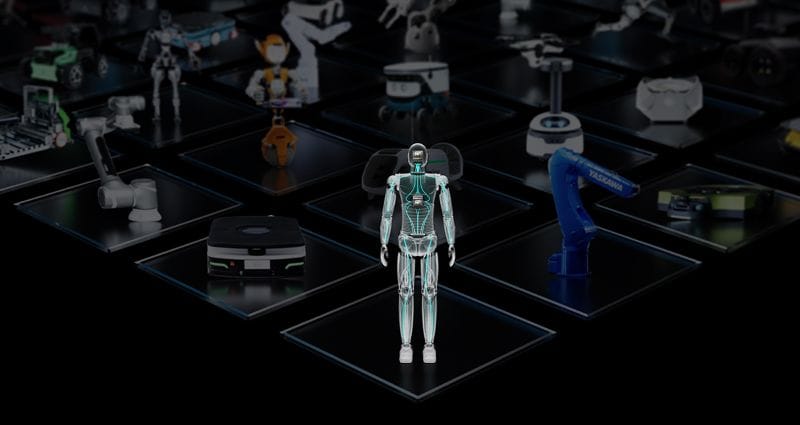
👀 What’s happening: Google DeepMind has merged its two-tier AI stack, the general-purpose Gemini 3 model and the embodiment-focused Gemini Robotics AI directly into Apptronik’s Apollo humanoid. In recent demos, Apollo handled soft and irregular objects it had never seen before, obeyed voice commands, and adjusted its grip as containers moved. Gemini 3 handles the cognition: understanding language, planning goals, and reasoning about context. Gemini Robotics AI converts those plans into motor-level commands, letting Apollo act smoothly in the real world without retraining for each new object or environment.
🔥 How this hits reality: This pairing turns Apollo into something closer to a platform than a prototype. The same Gemini brain can inhabit multiple robotic bodies, from warehouse arms to full humanoids, giving DeepMind a path toward scalable, reusable control. By running “Gemini Robotics On-Device,” all inference happens locally, cutting cloud latency and cost. If this architecture holds outside the demo, it could standardize how robots think and move, doing for embodiment what Android once did for smartphones.
🤖 Our take: One brain, many bodies. DeepMind just gave humanoids a shared operating system.
HUMANOIDS
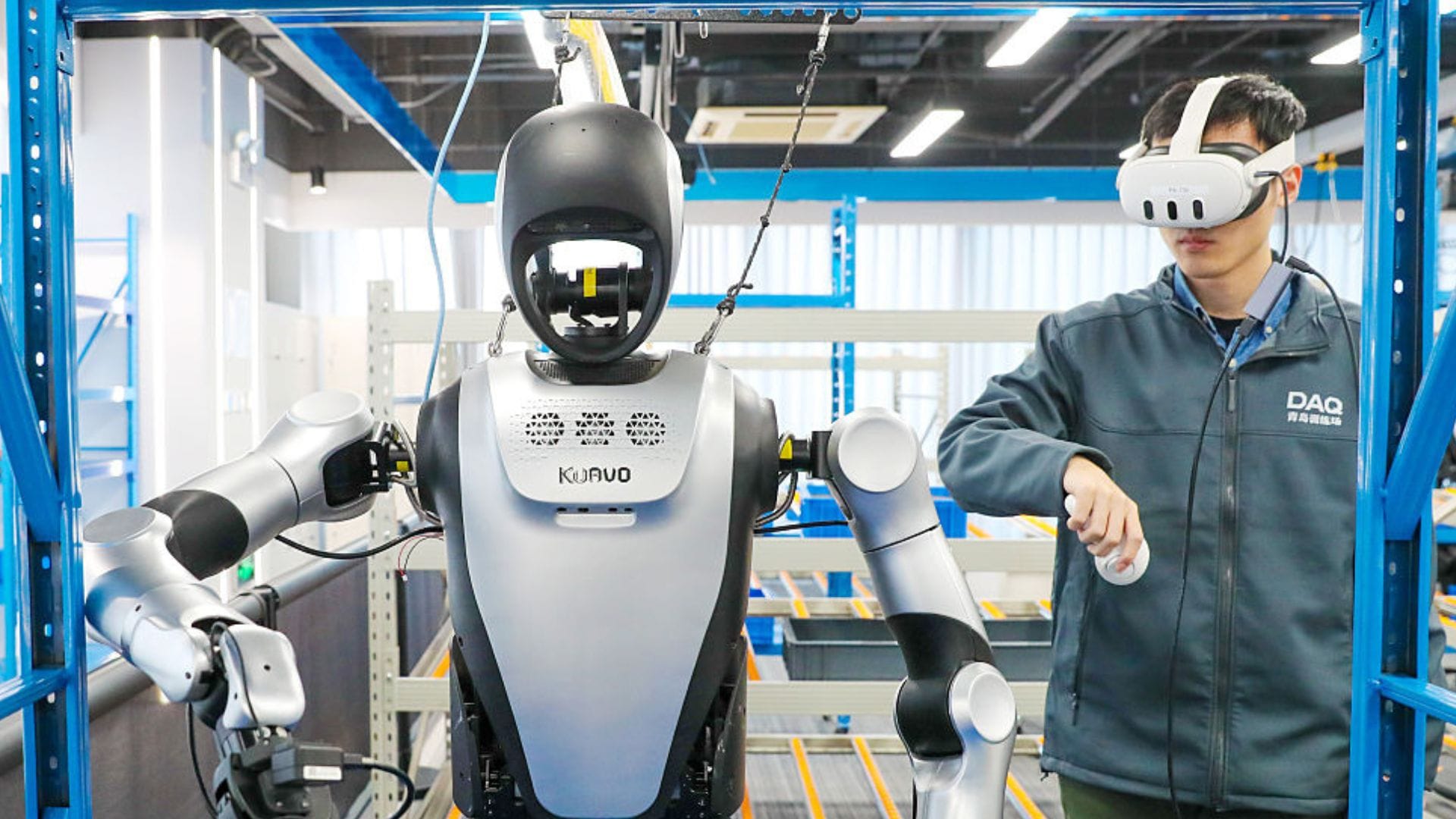
Unitree Builds an App Store for Robot Muscles
👀 What’s happening: Unitree has unveiled what it calls the world’s first humanoid robot “App Store,” a developer platform where users can upload, share, and download specific robot skills. Through the new web and mobile interface, owners of Unitree’s G1 or other models can browse an Action Library filled with pre-trained behaviors—from dance routines to martial arts—and install them to their robots with one click. The platform also includes a Dataset section for sharing motion-capture data, effectively turning robot training into a crowdsourced project.
🔥 How this hits reality: For an industry still struggling to make humanoids useful beyond lab demos, this is a clear shift from hardware bragging to software ecosystems. Instead of waiting for firmware updates, users could soon download specific “tasks” just as they would install an app on a phone. The real upside lies in the dataset exchange, which could feed the machine-learning loops these robots depend on. But the risks are equally real—third-party actions mean third-party code running on 35-kilogram machines. Without airtight sandboxing, one bad upload could turn a dance move into a lawsuit.
🤖 Our take: The App Store logic is sound, but the platform may be arriving before humanoids are stable enough to deserve one.
MEDIC
Scientists Build Microrobot That Can Swim, Sense, and Decide

👀 What’s happening: Researchers from the University of Pennsylvania and the University of Michigan have built a microrobot smaller than a grain of salt, integrating a solar-powered motor, sensors, and an onboard computer. This chip-like device can “swim” through liquid, detect environmental changes such as temperature, and even communicate with a laptop, marking the first time a sub-millimeter robot has been able to sense, think, and act autonomously.
🔥 How this hits reality: It’s not sci-fi anymore that this platform hints at future robots that could travel through the bloodstream to deliver drugs, repair tissues, or monitor health from within. By merging computation and motion at a microscopic scale, the team bridges robotics and biology, a field long limited by the need for external control. Though its processing speed is slower than a basic calculator, it proves that autonomy can shrink to the scale of cells. That’s a big deal for medicine, where precision is measured in microns.
🤖 Our take: A robot this small proving it can sense and act is a genuine leap. Medicine might just got its first programmable cell.
QUICK HITS
- Robotics pioneer Rodney Brooks criticizes Silicon Valley’s bet on all-purpose humanoid robots as detached from practical robotics.
- 1X partnered with EQT to deploy up to 10,000 Neo humanoid robots over five years across manufacturing, facilities, and healthcare.
- Richtech Robotics’ ADAM robot bartender is now operating at an NHL arena, highlighting real-world hospitality robotics.
- Advanced Intralogistics partnered with AlphaOne Robotics to deploy the Sigma Unloader for automated trailer unloading in North America.
- Galbot is planning a 2026 Hong Kong IPO at a valuation of up to $4 billion, putting its retail- and logistics-focused humanoid robots to a market test.
TOGETHER WITH US
AI Secret Media Group is the world’s #1 AI & Tech Newsletter Group, reaching over 2 million leaders across the global innovation ecosystem, from OpenAI, Anthropic, Google, and Microsoft to top AI labs, VCs, and fast-growing startups.
We operate the industry’s most influential portfolio of newsletters, each shaping a different frontier of the AI & Tech revolution:
Be Smarter in 5 Minutes
- AI: AI Secret
- Tech & Business: Bay Area Letters
- Marketing: Marketing Secret
Discover the Future Products
- AI Launchpad: Oncely
- Robotics: Robotics Herald
- Hardwares: The Hardwire
We've helped promote over 500 Tech Brands. Will yours be the next?
Email our co-founder Mark directly at mark@aisecret.us if the button fails.