🤖 DreamDojo

Good Morning, Roboticists!
What used to live in demos, labs, and research videos is now crossing into production floors and public spaces, forcing the industry to prove that embodied AI actually works outside controlled environments.
TRAINING
DreamDojo Reframes Robot Learning
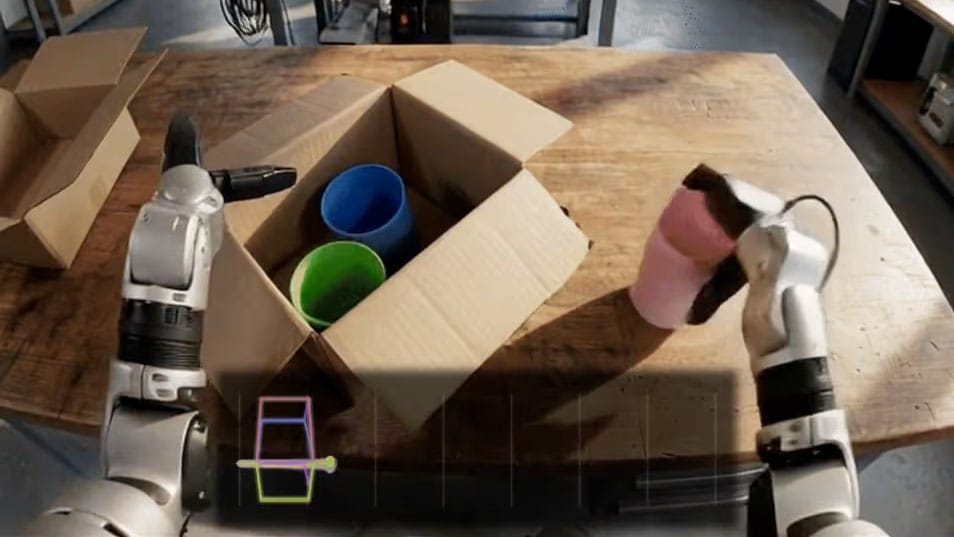
👀 What’s happening: Nvidia released DreamDojo, a robot world model trained on 44,000 hours of human first person video. Instead of relying on robot demonstrations or synthetic simulators, it learns physical intuition by watching how people interact with objects, spaces, and failures, then transfers that knowledge to different robot bodies.
🌍 How this hits reality: Most world models learn inside narrow robot demo setups. DreamDojo learns outside them. A robot entering a new warehouse can already reason about whether a box will tip or a cup will collide, because it has seen humans handle similar situations. That reduces robot specific data needs, cuts retraining when layouts change, and lowers deployment risk.
🤖 Key takeaway: This shifts robotics from hardware bound learning to reusable software layers. If human trained world models hold up, simulation replaces much physical trial and error, accelerating humanoid rollout across logistics, manufacturing, and testing.
FACTORY
Foundation Opens Its Robotics Factory
👀 What’s happening: Robotic startup Foundation allowed cameras into its San Francisco humanoid factory, showing Phantom MK1 robots being assembled largely by hand. Viewers saw exposed wiring, manually pressed pins, and unfinished subsystems. This was not a polished demo. It was a deliberate look at how real units are built today, not how they might look in a concept future.
🌍 How this hits reality: This kind of factory transparency is rare in robotics. Most teams hide behind renders and choreographed demos because manufacturing exposes weakness fast. By opening the floor, Foundation is shifting the comparison set. As more humanoid startups chase attention and capital, competition is moving from intelligence claims to build quality, durability, and supply chain credibility. The bar is quietly rising.
🤖 Key takeaway: This was a positioning move, not a publicity stunt. Foundation is signaling it wants to compete on deployability, not spectacle. As rivals scale promises, the market is starting to sort by who can actually build machines that survive real environments.
DOGS
Robot Dogs Make Their World Cup Debut
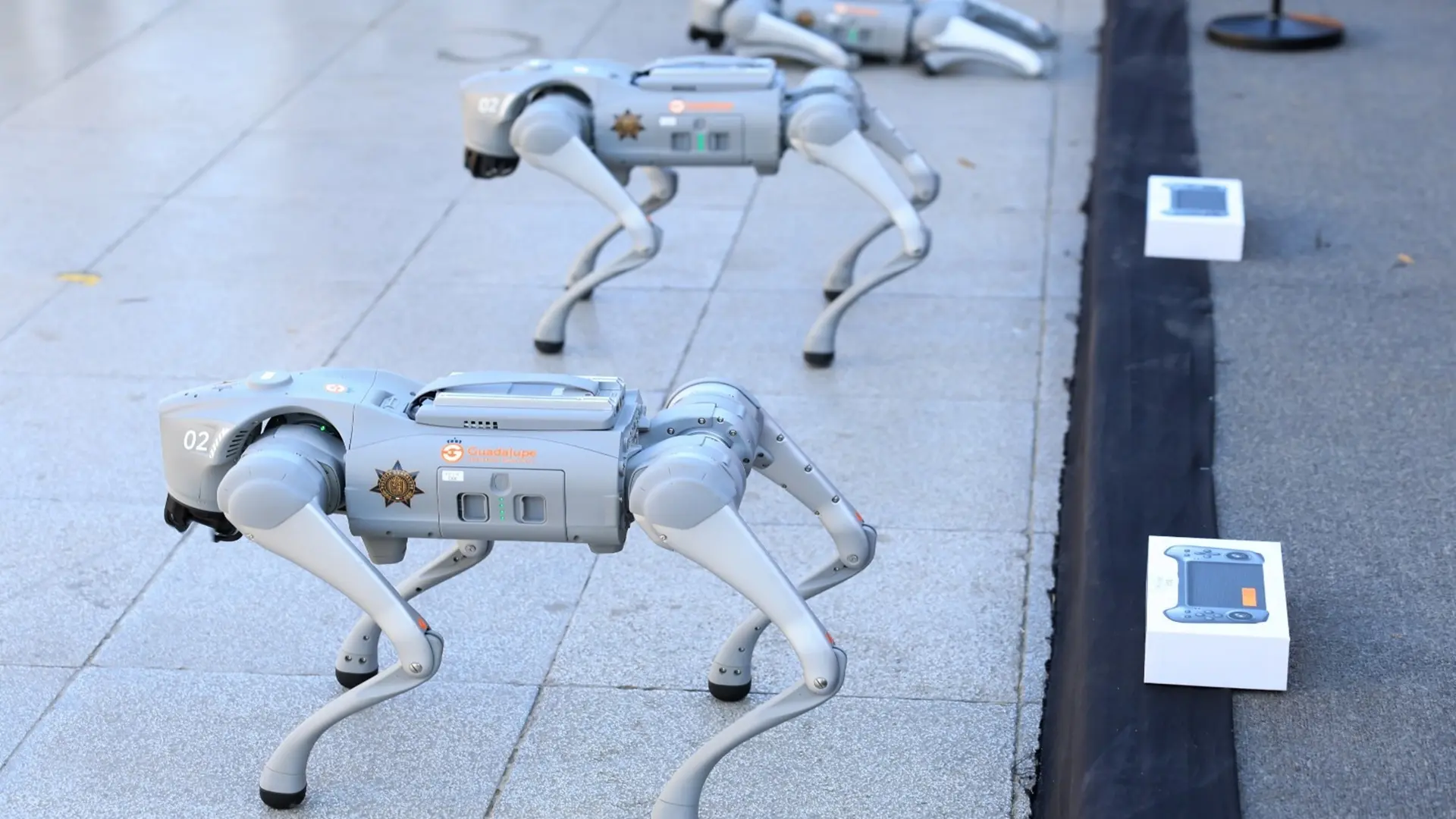
👀 What’s happening: Mexican police in Guadalupe confirmed they will deploy four robot dogs during the 2026 FIFA World Cup for early threat checks. The machines enter risky spaces first, stream live video, and issue voice commands. This is a rare case of a major international sporting event formally integrating quadruped robots into frontline security workflows.
🌍 How this hits reality: Large tournaments usually rely on manpower, cameras, and drones. Adding robot dogs changes the sequence of response. Officers gain visibility before physical exposure, especially in tight corridors, stairwells, and low light areas. At roughly $145,000 total, the spend is small. The signal is confidence that these systems are reliable enough for real crowds, not demos.
🤖 Key takeaway: This marks a quiet validation moment for robotic. If robot dogs can be trusted at the World Cup scale, they move from experimental policing tools to accepted infrastructure. Expect broader adoption at airports, transit hubs, and future mega events.
DAILY TL;DR
- Alibaba launched its RynnBrain model to advance physical AI and improve robots’ environmental understanding.
- Destro AI launched its Agentic AI Brain to coordinate robots and humans as a shared intelligent system in complex physical operations.
- Allonic raised a $7.2 million pre-seed to rethink robot body manufacturing, highlighting early European backing of core robotics hardware.
- The U.S. Navy is rethinking command structures to turn unmanned and autonomous systems into deployable, mission-ready forces.
- Boston Dynamics CEO Robert Playter is stepping down after six years, during which the company transitioned ownership and launched the electric Atlas humanoid.
READ MORE
Let the Future Come to Your Inbox
Stay ahead without drowning in information. We turn the most important signals across AI, tech, marketing, and future products into 5-minute reads you can actually finish.
- AI Secret uncovers what really matters in AI
- Bay Area Letters decodes tech and business shifts from Silicon Valley
- Robotics Herald tracks how robots move from labs into daily life
- Marketing Secret breaks down real growth and go-to-market playbooks
- The Hardwire explores hardware, consumer tech, and what’s coming next
- Oncely helps you discover the next wave of AI products and launches
TOGETHER WITH US
AI Secret Media Group is the world’s #1 AI & Tech Newsletter Group, reaching over 2 million leaders across the global innovation ecosystem, from OpenAI, Anthropic, Google, and Microsoft to top AI labs, VCs, and fast-growing startups.
We've helped promote over 500 Tech Brands. Will yours be the next?
Email our co-founder Mark directly at mark@aisecret.us if the button fails.