🤖 Optimus Finally Runs Fast

Good Morning, Roboticists!
From humanoids to spiders to flying micro-insects, robots are no longer just learning to move; they’re learning to move fast, cheap, and everywhere.
HUMANOIDS
Optimus Finally Runs Fast
Just set a new PR in the lab pic.twitter.com/8kJ2om7uV7
— Tesla Optimus (@Tesla_Optimus) December 2, 2025
👀 What’s happening: Tesla dropped a tidy thirty second “PR” clip of Optimus running across a polished lab floor. Pixel-math analysts pegged it at roughly 3.8 meters per second, which nudges it into the same speed bracket as Unitree and RobotEra. The stride shows a real flight phase, so yes, Optimus is technically running now.
🔥 How this hits reality: Give credit where it is due. Achieving controlled, repeatable running in a clean lab is still a meaningful milestone because it proves the actuators, balance loops, and reinforcement learning stack are finally in the same conversation as Unitree and RobotEra. Yet the celebration is provisional. Laboratory sprints are engineered calm, while the real proving grounds are curbs, gravel, slopes, potholes, and the unpredictable chaos where customers actually need robots to move. The breakthrough is real, however the verdict waits for the robot that can keep this speed once the floor stops helping.
🤖 Key takeaway: Congrats to the lab team, although the stopwatch only counts once Optimus runs where the world is not flat.
FOREST
A spider frame just humbles traditional reforestation
👀 What’s happening: Two college students in Lisbon built Trovador, a six-legged reforestation robot designed to restore forests lost to wildfires. Its recycled frame costs just $17, while sensors and AI modules give it the ability to climb unstable terrain, plant 200 saplings an hour, and achieve a 90% survival rate. For comparison, drone seeding averages under 10% germination, and human crews plant 80 to 100 saplings an hour—at far higher labor and safety costs.
🔥 How this hits reality: This is a direct hit on two corners of the reforestation industry. Drones win on coverage but waste 90% of their seeds; manual or mechanical crews win on precision but lose on cost, safety, and scale. Trovador sits between those extremes: cheap, autonomous, terrain-aware, and precise enough to make every sapling count. Forestry departments, insurers, and NGOs now have a model that could cut per-tree costs by up to sixfold and make replanting steep, burned zones financially viable for the first time.
🤖 Key takeaway: When a $17 spider bot plants faster, safer, and smarter than climate tech’s million-dollar gear, the future of reforestation stops being experimental; it becomes affordable.
MICRO ROBOTS
MIT’s micro-insect robot earns its wings
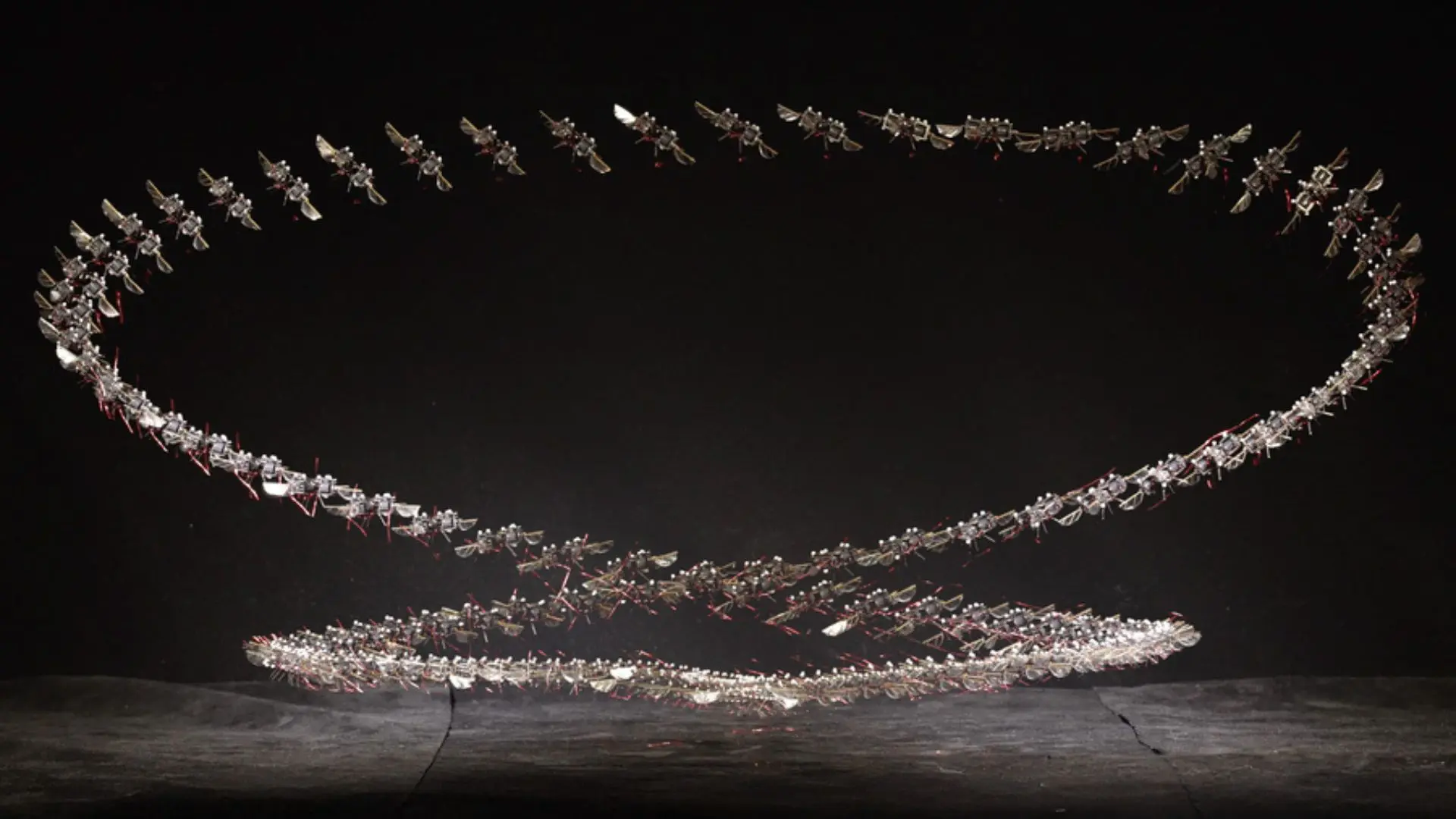
👀 What’s happening: MIT’s Soft and Micro Robotics Lab unveiled a flying robot the size of a microcassette and lighter than a paperclip. Equipped with soft-actuated wings and an AI control system trained through imitation learning, the machine now flies 447% faster and accelerates 255% more aggressively than earlier prototypes that reached just 0.5–0.8 m/s. It can perform ten somersaults in eleven seconds, stay within five centimeters of its course, and stabilize mid-air like a real insect.
🔥 How this hits reality: At this scale, drones stop being delivery toys and start becoming sensors with wings. A swarm of these could map cracks in bridges, inspect turbines, or crawl through earthquake rubble, places where quadcopters bounce and humans can’t fit. The price isn’t in aluminum; it’s in autonomy. Once onboard navigation replaces external tracking, this becomes a new class of disposable field robot: cheap, small, and unnervingly capable.
🤖 Key takeaway: Nature’s flight manual just got photocopied into a robot the size of lost pocket change.
QUICK HITS
- Unitree secured a bipedal robot design patent, expanding inspection and security applications while advancing its open-source and “GAMEBOT” efforts.
- DHL and Robust.AI will roll out Carter robots across Mexico and the Americas to boost warehouse efficiency through modular deployment.
- Ishida acquired Robot Grader to fold its protein packing robotics into its automation and global expansion strategy.
- Realtime Robotics launched Resolver in Japan at iREX 2025, adding new features to speed up robotic workcell design and deployment.
- Tecan acquired key Wako Automation software and hardware assets to expand and strengthen its robotic workcell and custom lab automation offering.
TOGETHER WITH US
AI Secret Media Group is the world’s #1 AI & Tech Newsletter Group, boasting over 2 million readers from leading companies such as OpenAI, Google, Meta, and Microsoft. Our Newsletter Brands:
- AI: AI Secret
- Tech & Business: Bay Area Letters
- Robotics: Robotics Herald
We've helped promote over 500 Tech Brands. Will yours be the next?
Email our co-founder Mark directly at mark@aisecret.us if the button fails.