
🤖 Robot Horses Enter Traffic

Good Morning, Roboticists!
Robots had a very physical weekend: record sprints, rough landings, rideable robot horses, tactile hands, searchable data, and the quiet logistics work that decides what becomes real.
Robot Horses Enter Traffic
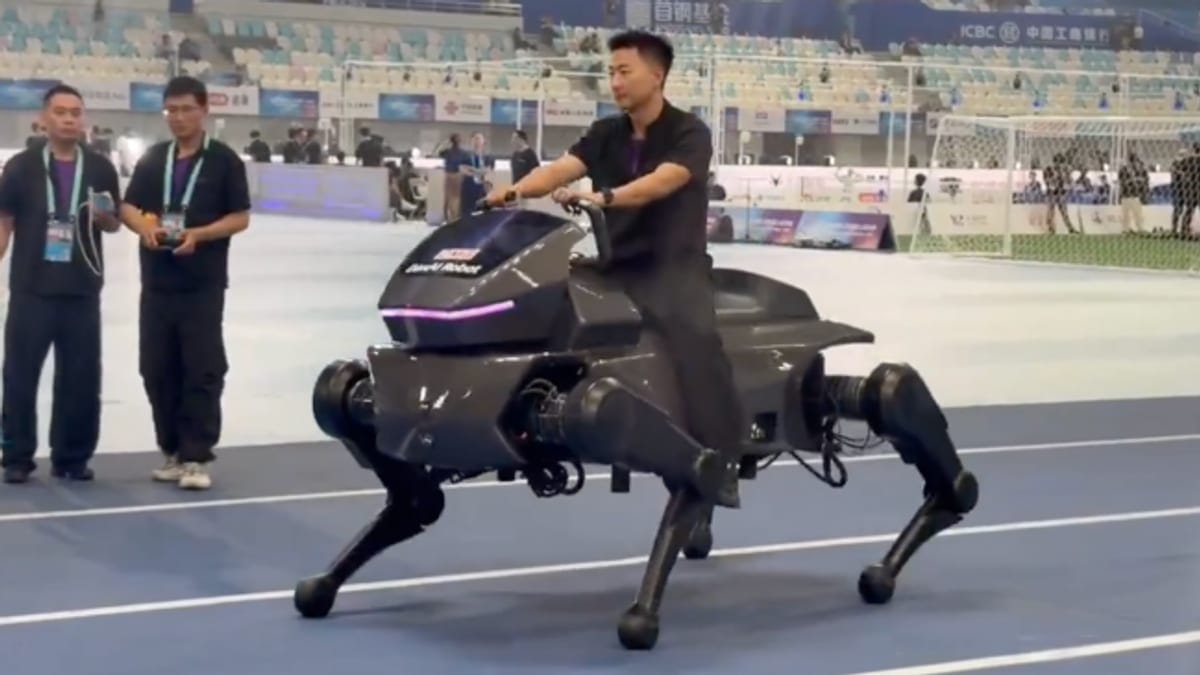
TL;DR: The Qiji X1 turned a Beijing expo demo into a rideable robotics moment, carrying a humanoid rider on four mechanical legs with a saddle and handlebars. Built by DaxAI Robotics, the machine is pitched as an all-terrain robotic horse that can carry up to 660 pounds, moving quadruped design from spectacle toward utility in crowded, uneven places. Read more ->
Speed Records Hit Cushions
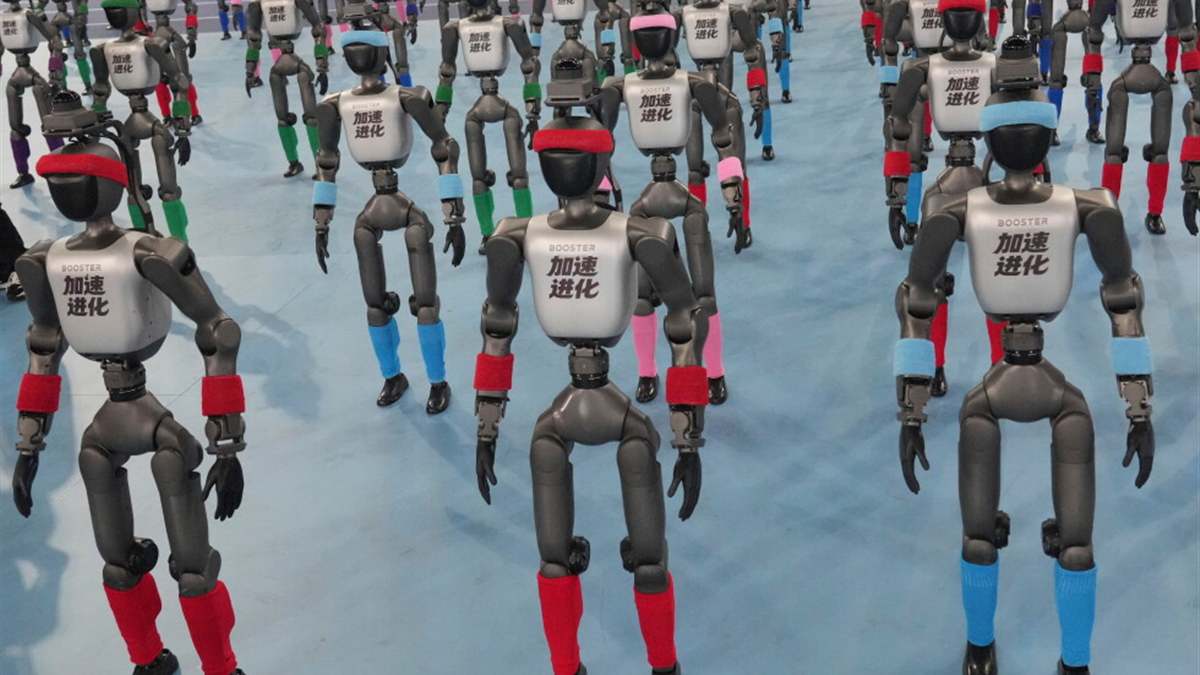
TL;DR: At Beijing's World Humanoid Robot Games, X-Humanoid machines reportedly beat human marks in the 100-meter sprint and standing high jump, with one robot running 9.39 seconds and another clearing 2.88 meters. The catch was visible too: braking remained messy, with competitors slamming into padded walls after crossing the line and being carried away on stretchers. Read more ->
The Real Test Looks Boring
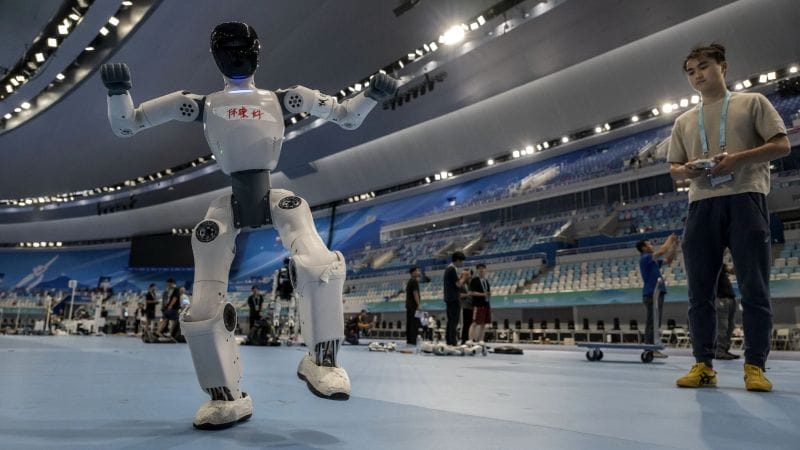
TL;DR: Beyond sprint records, Beijing's five-day robot games are pushing humanoids into packaging, warehouse, restaurant, office, and emergency scenarios. More than 40 percent of events require full autonomy, according to Huawei, turning cable plugging, object handling, and error recovery into the quieter tests that decide whether robots can actually work outside polished demonstrations for customers this year. Read more ->
Battlefield Robots Leave The Booth

TL;DR: At the 2026 World Robot Conference, Chinese exhibitors showed robots built for patrols, suspect restraint, aviation support, and military-adjacent tasks. AVIC's Fengxing-001 humanoid can carry loads, assist aircraft ground operations, and is being tested in simulated piloting, while robotic dogs demonstrated camera patrols and electromagnetic net launchers for remote restraint at industrial sites and airports. Read more ->
One Demo Starts To Matter
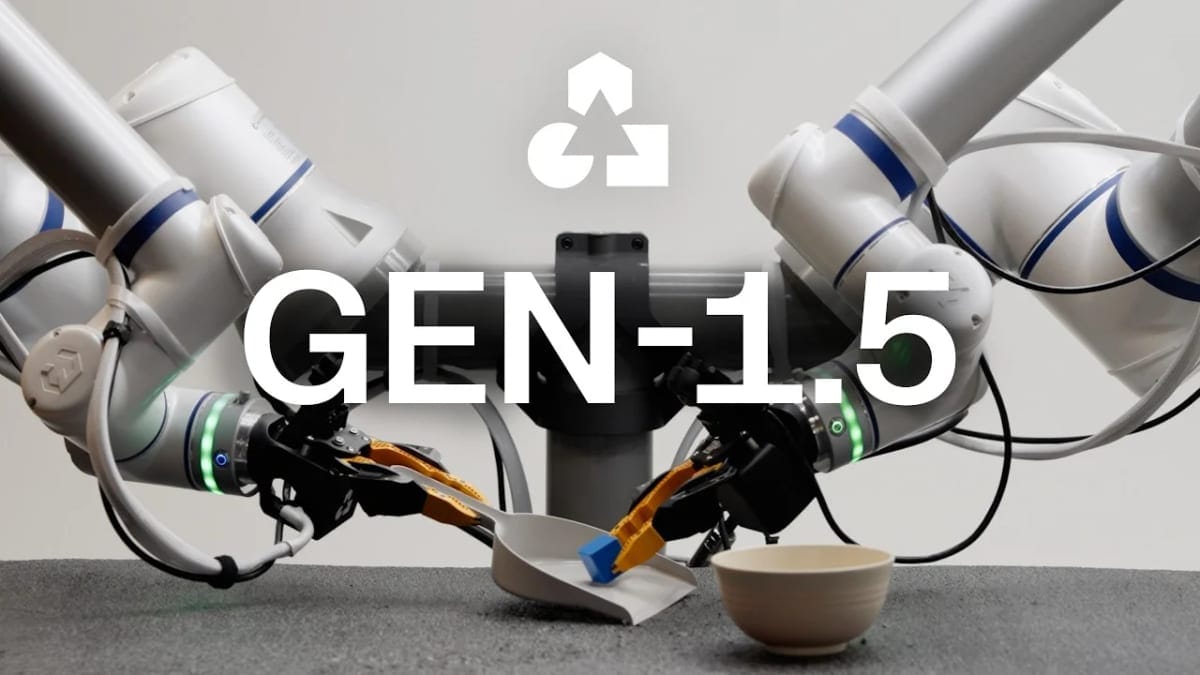
TL;DR: Generalist AI unveiled GEN-1.5, a robot foundation model built to learn physical tasks from a single short demonstration. The system processes video, sensor, language, and proprioceptive inputs, then outputs 100 Hz action trajectories, reaching 59 percent average success across 10 tasks without fine-tuning and 83 percent after light adaptation, rather than days-long retraining workflows. Read more ->
Touch Gets Its Own Loop
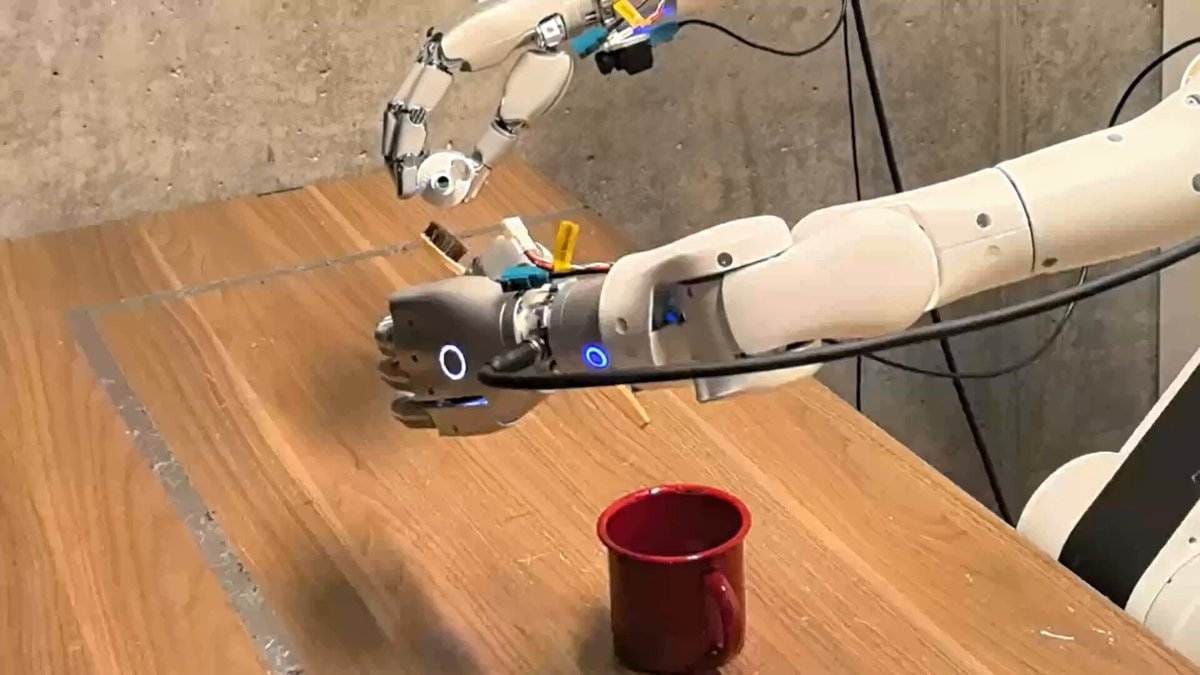
TL;DR: NVIDIA and Berkeley open-sourced T-Rex, a tactile robot model that gives touch its own fast control loop beside slower visual planning. Built on synchronized robot play data and tactile hand hardware, the release targets contact-heavy moments cameras miss, like separating cups, snapping magnets into place, or seating a USB connector cleanly under changing force in real time. Read more ->
Rail Freight Gets Robot Hands
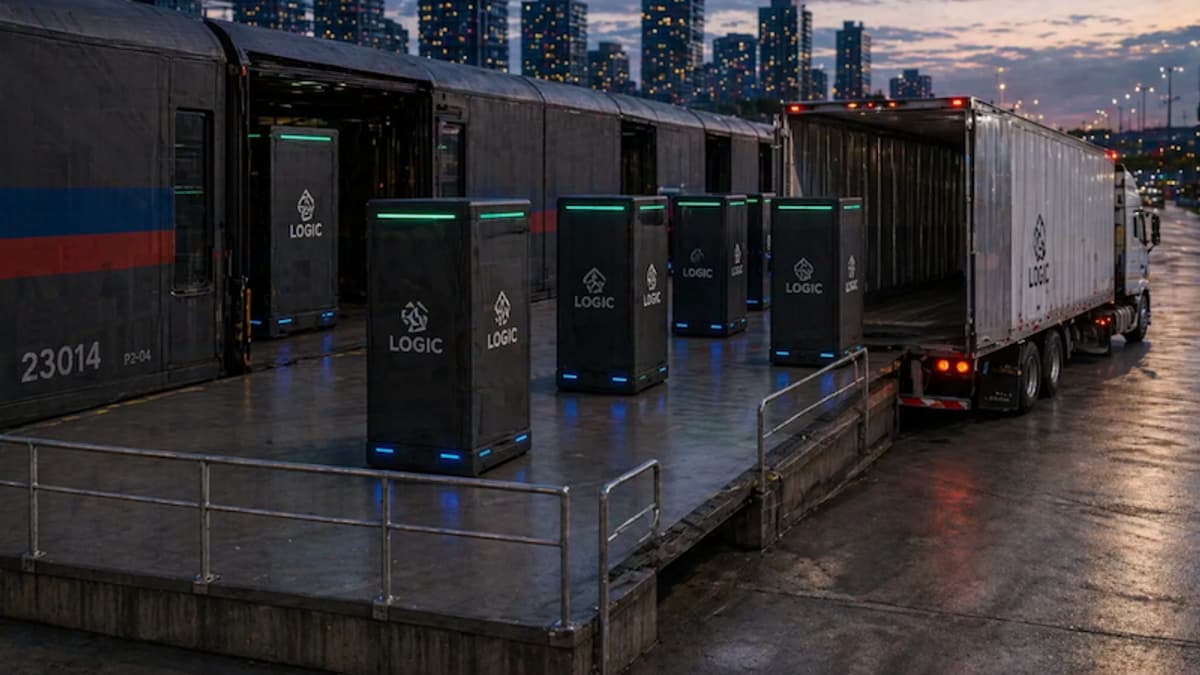
TL;DR: Logic Robotics launched an autonomous rail-to-road transloading system built around the Logic Pallet and its Digital Twin OS. The platform is designed to transfer goods between railcars and trucks without forklifts, while tracking inventory, weight, and task progress so terminals can simulate bottlenecks and assign workloads dynamically before crews touch the dock during peak shifts. Read more ->
Small Bodies Read Rough Ground
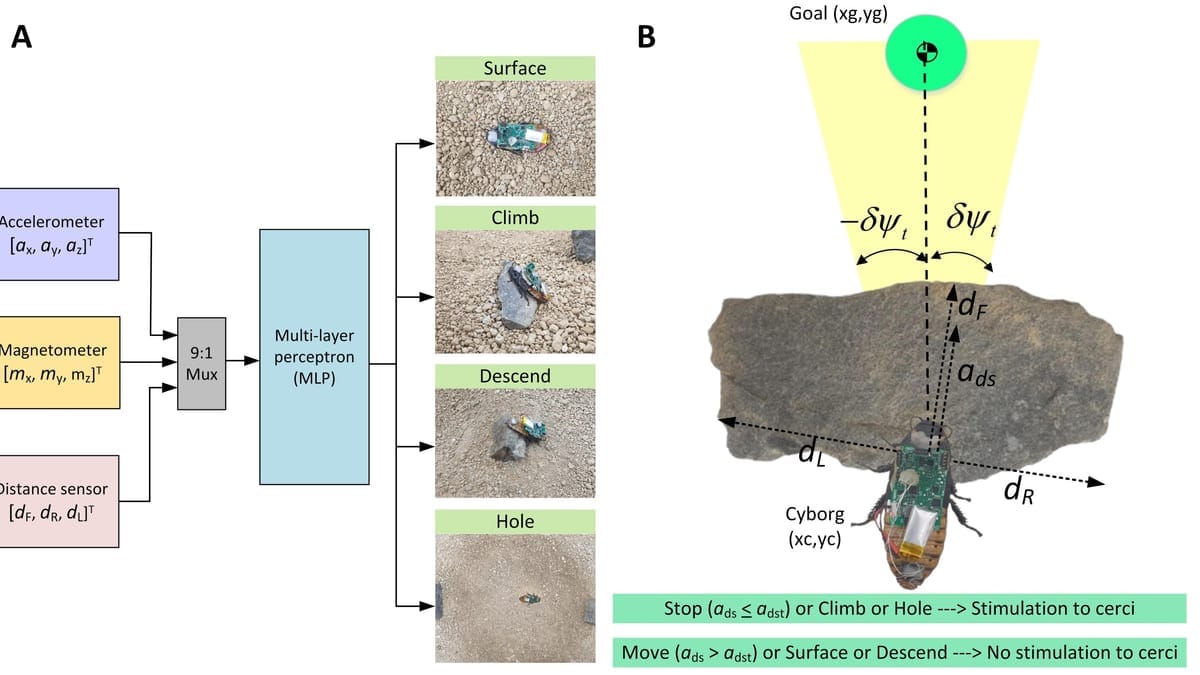
TL;DR: Researchers in Japan and Indonesia developed an AI terrain-recognition system for cyborg insect navigation, combining onboard sensor data with a multilayer perceptron classifier. The system identified flat ground, slopes, and holes with 92 percent offline accuracy, helping the biohybrid robots adjust stimulation and keep moving through search-and-rescue or inspection environments where wheels struggle around debris. Read more ->
Picking Leaves The Pilot Phase
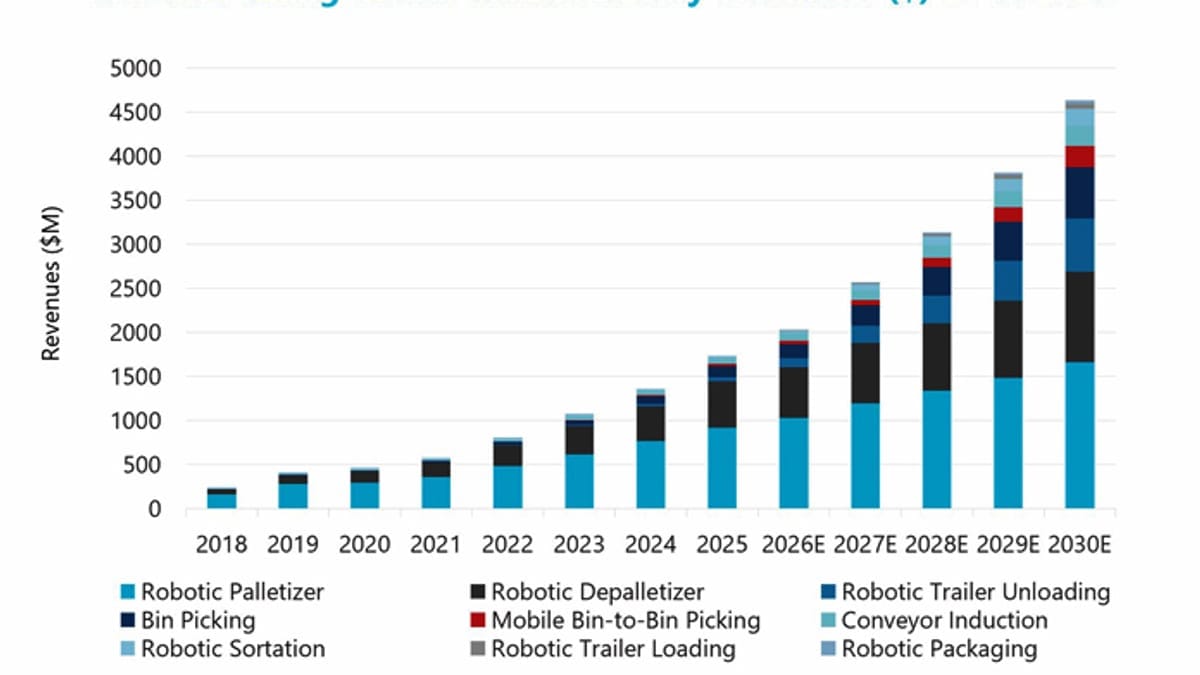
TL;DR: Interact Analysis expects robotic picking revenue to rise from $1.7 billion in 2025 to $4.6 billion by 2030, driven by proven deployments and integrated bin-picking systems. Palletizing and depalletizing still dominate today, but faster growth is shifting toward mixed-case, bin, and trailer-unloading work inside warehouses as software improves and buyers gain confidence across more sites. Read more ->
Surgery Robots Need Better Tools
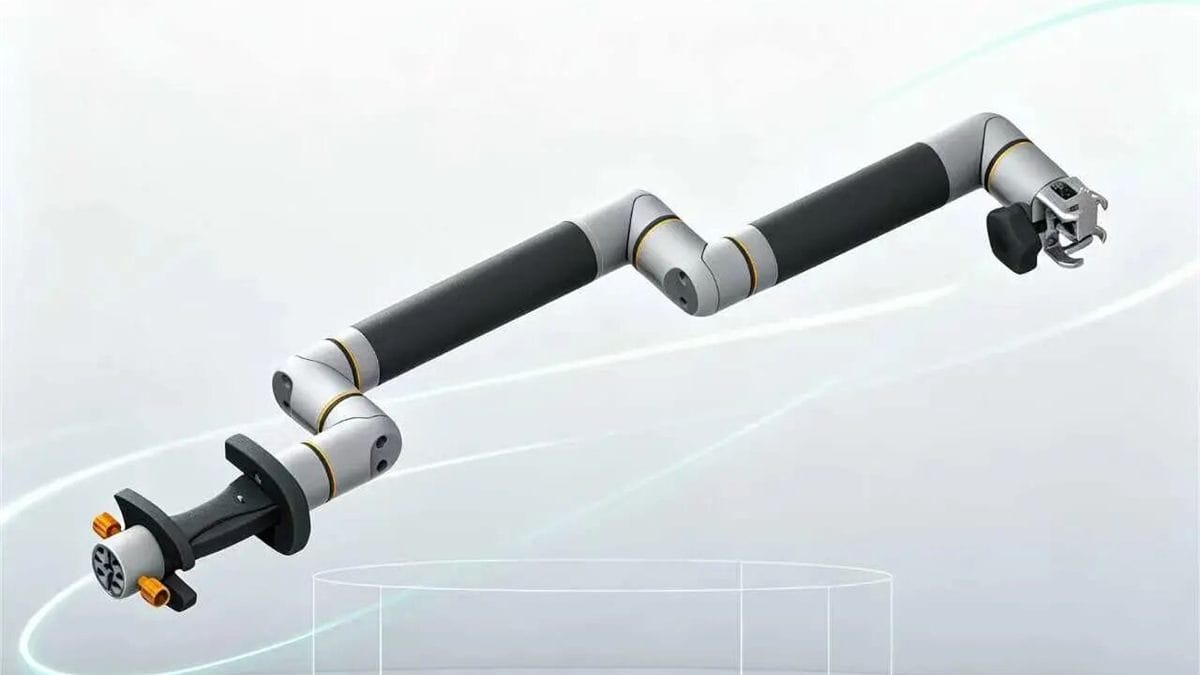
TL;DR: Liangyi used CAOS 2026 in Jinan to debut three orthopedic product lines: a universal positioning arm, a large-bone surgical power system, and a high-speed power system reaching 95,000 rpm. The launches push the company further upstream into hardware that connects robotic surgical planning with stable intraoperative execution in bone procedures and joint reconstruction during surgery. Read more ->
READ MORE
Let the Future Come to Your Inbox
Stay ahead without drowning in information. We turn the most important signals across AI, tech, marketing, and future products into 5-minute reads you can actually finish.
- AI Secret uncovers what really matters in AI
- Bay Area Letters decodes tech and business shifts from Silicon Valley
- Robotics Herald tracks how robots move from labs into daily life
- Marketing Secret breaks down real growth and go-to-market playbooks
- The Hardwire explores hardware, consumer tech, and what’s coming next
TOGETHER WITH US
AI Secret Media Group is the world’s #1 AI & Tech Newsletter Group, reaching over 2 million leaders across the global innovation ecosystem, from OpenAI, Anthropic, Google, and Microsoft to top AI labs, VCs, and fast-growing startups.
We've helped promote over 500 Tech Brands. Will yours be the next?
Email our co-founder Mark directly at mark@aisecret.us if the button fails.