🤖 Robots Use Brain Signals

Good Morning, Roboticists!
Hardware constraints are now variables inside software systems that learn, adapt, and redeploy.
Robots Use Brain Signals
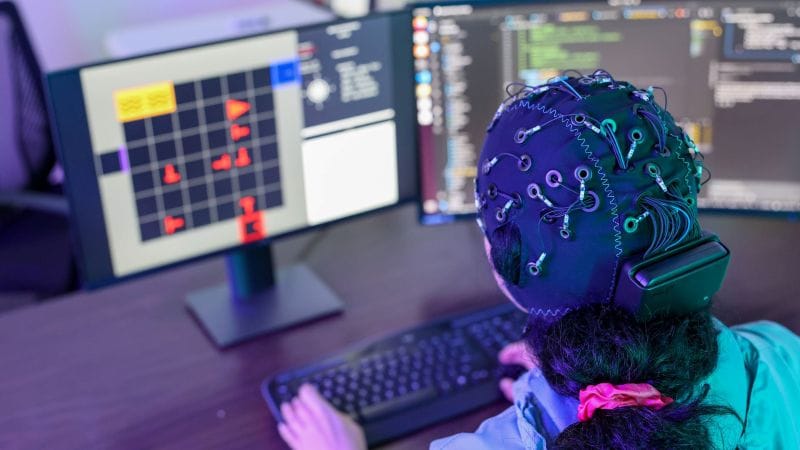
TL;DR: Oklahoma State University researchers built a system that lets robots read human brain signals using EEG caps. By detecting error-related potentials generated when a person notices a mistake, the robot can immediately slow down, stop, or return control. The system uses adaptive decoding models and runs on NVIDIA Isaac Lab and ROS for real-time operation.
IntBot Builds Social Humanoid Layer
TL;DR: At NVIDIA GTC 2026, IntBot showcased humanoid robots powered by its IntEng social intelligence engine, trained on continuous interaction data and sentiment analysis. The system runs on edge compute with NVIDIA Cosmos models, enabling real-time scene understanding and natural interaction. Its software supports multiple robot platforms and is already deployed in hotel concierge robots operating continuously.
AI Helps Robots See Through Walls
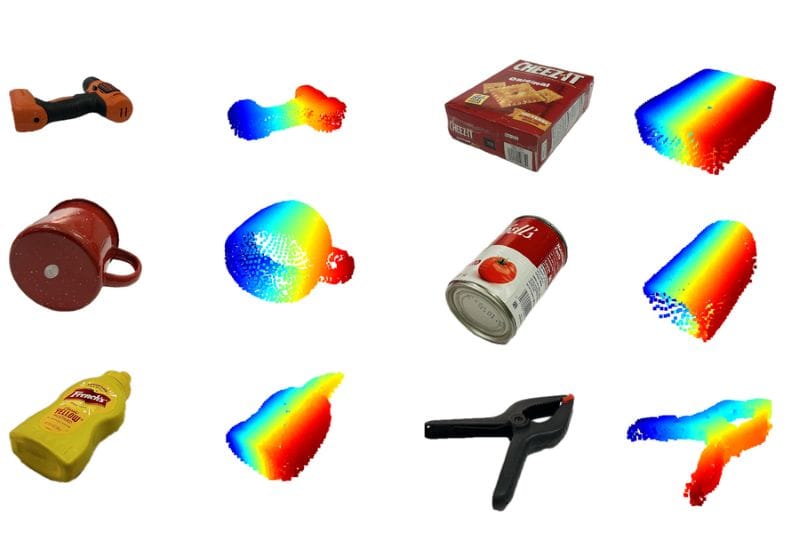
TL;DR: MIT researchers developed a system that uses generative AI and wireless signals to help robots detect and reconstruct objects hidden behind obstacles. The method builds partial shapes from signal reflections and completes them with AI, improving accuracy. An extended system can also reconstruct entire rooms from a single radar, enabling robots to locate, grasp, and navigate without direct visual input.
Compostable Robot Breakthrough

TL;DR: Researchers from Seoul National University, Sogang University, and Johannes Kepler University developed a fully compostable soft robot that maintains performance over one million cycles before decomposing in soil. Built with biodegradable elastomers and electronics, the robot integrates sensors and actuators, and both its structure and circuits break down within months without leaving toxic residue.
Skild AI Demo Shows Workflow
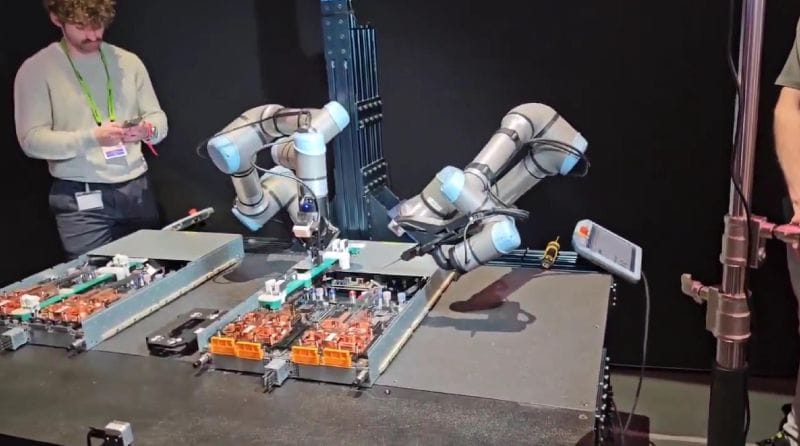
TL;DR: At NVIDIA GTC 2026, Skild AI demonstrated a desktop robot using dual-arm coordination to autonomously perform precise manufacturing tasks on a device. The demo highlighted fine manipulation capabilities, and observers noted that adding a mobile robot—wheeled or humanoid—to transport the device between stations would complete a full end-to-end automated workflow.
NVIDIA Turns Robotics Into Pipelines
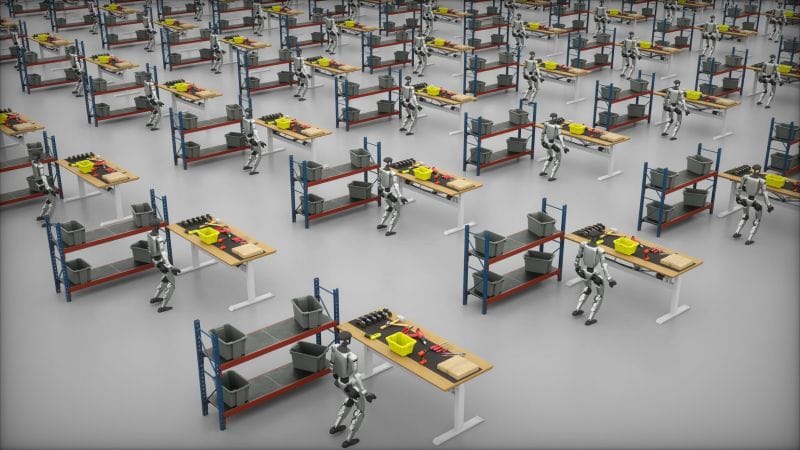
TL;DR: NVIDIA outlined a full-stack robotics workflow at GTC 2026, turning robot development into a standardized pipeline. Using Isaac frameworks, Omniverse simulation and synthetic data, developers can generate data, train VLA models like GR00T, test at scale and deploy on Jetson hardware. The stack also integrates long-running agents like OpenClaw, enabling robots to continuously learn and improve after deployment.
NVIDIA Targets Hospital Robotics
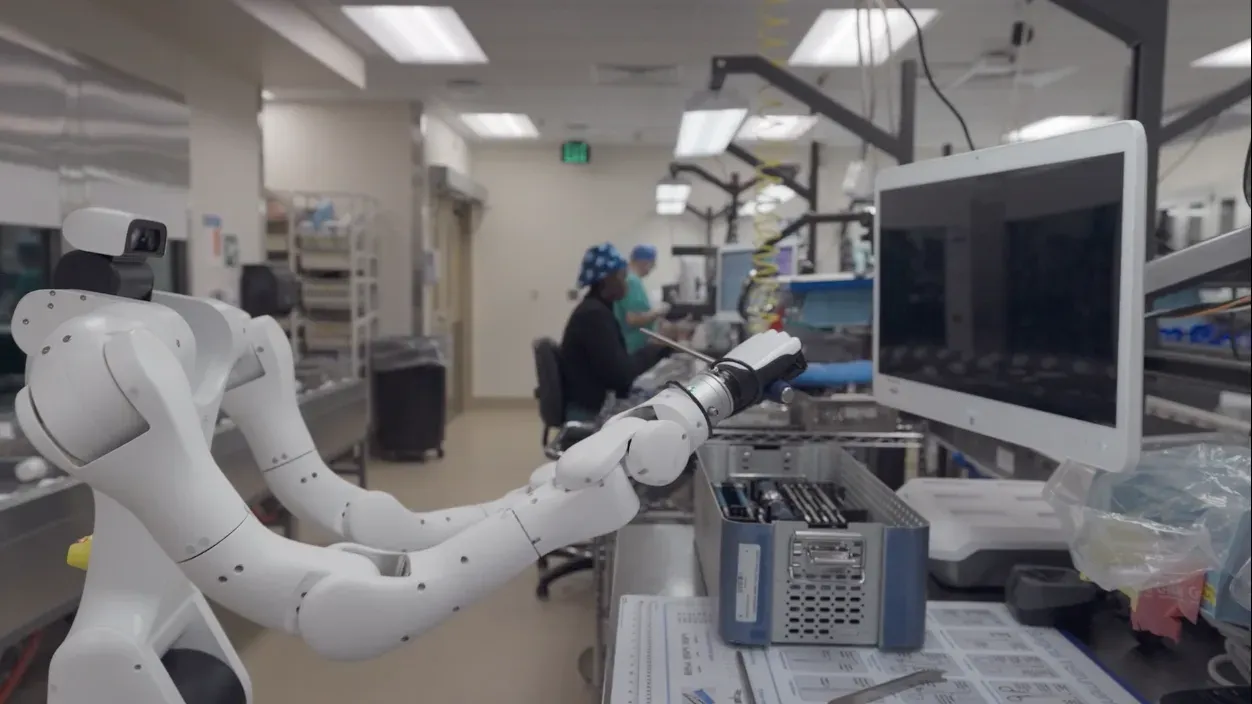
TL;DR: NVIDIA introduced an open healthcare robotics platform at GTC 2026, combining datasets like Open-H, simulation tools such as Cosmos-H, and vision-language-action models. Companies including Johnson & Johnson MedTech and Proximie are building systems that help robots observe surgeries in real time and manage operating room coordination tasks within clinical workflows.
Humanoid Robots Near Human Speed
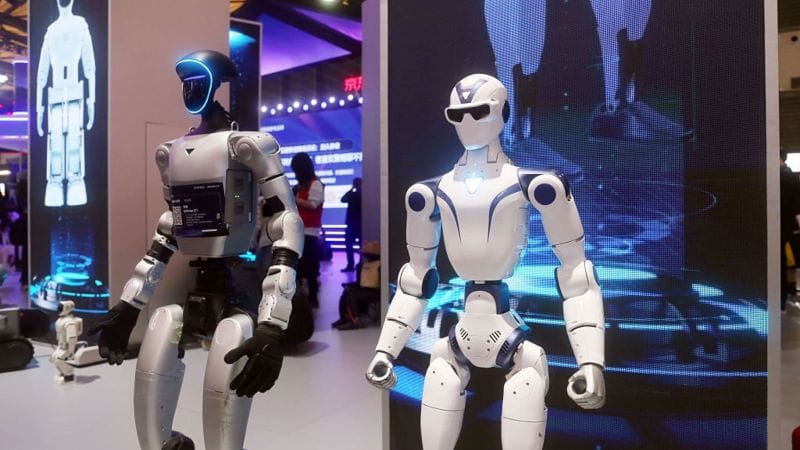
TL;DR: Unitree Robotics founder Wang Xingxing said at the Yabuli China Entrepreneurs Forum that humanoid robots may soon surpass human sprint speeds in the 100-meter dash. Recent robots like “Bolt” have reached around 10 meters per second, approaching human performance, as advances in mechanical design, control systems, and coordination continue improving running capabilities.
READ MORE
Let the Future Come to Your Inbox
Stay ahead without drowning in information. We turn the most important signals across AI, tech, marketing, and future products into 5-minute reads you can actually finish.
- AI Secret uncovers what really matters in AI
- Bay Area Letters decodes tech and business shifts from Silicon Valley
- Robotics Herald tracks how robots move from labs into daily life
- Marketing Secret breaks down real growth and go-to-market playbooks
- The Hardwire explores hardware, consumer tech, and what’s coming next
TOGETHER WITH US
AI Secret Media Group is the world’s #1 AI & Tech Newsletter Group, reaching over 2 million leaders across the global innovation ecosystem, from OpenAI, Anthropic, Google, and Microsoft to top AI labs, VCs, and fast-growing startups.
We've helped promote over 500 Tech Brands. Will yours be the next?
Email our co-founder Mark directly at mark@aisecret.us if the button fails.