
🤖 The Dark Gets Whiskers

Good Morning, Roboticists!
No light, no map, no calibration target, imperfect demonstrations, unfamiliar homes. The interesting robots now begin where the assumptions end.

The Dark Gets Whiskers
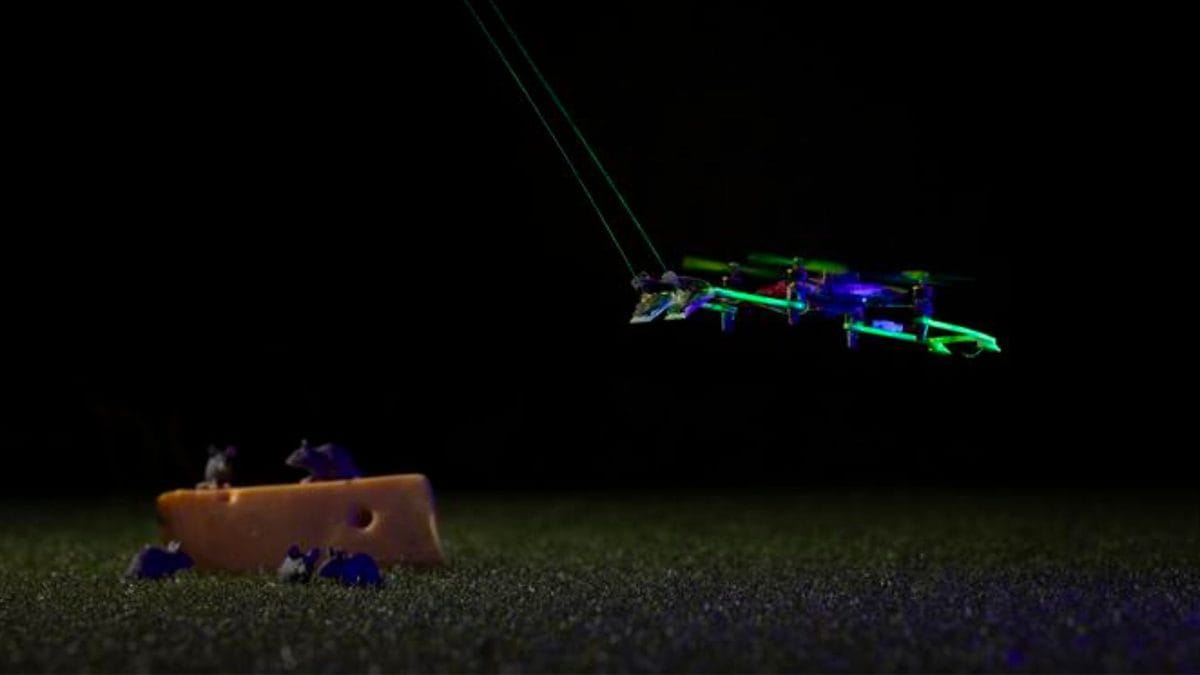
TL;DR: Researchers at Delft University of Technology fitted a sub-100-gram drone with two flexible artificial whiskers and six pressure sensors, letting it navigate dark, dusty, cramped spaces without cameras or lidar. An onboard system using only 34 KB filters propeller noise and estimates contact depth. Flight tests mapped unknown rooms, followed surfaces, and located exits in darkness autonomously. Read more →
TOGETHER WITH QODER
Your work doesn’t live in one tool. Neither should your agent.
Qoder is built around the task, wherever it starts: a rough brief, a live issue, a folder of files, or a prototype idea. It plans the work, uses the context and tools you authorize, keeps progress visible, and pauses when your judgment is needed.
Try it on work you actually care about: select Qwen3.8-Flash in Qoder and use it for free through September 30. No paid subscription or Credits required.
Rare Earths Get A Lab

TL;DR: USA Rare Earth partnered with Pasqal and Riven Systems to combine quantum machine learning with Riven's self-driving separation lab. The partners plan thousands of automated experiments to find molecules that better isolate rare earth elements, then validate top candidates in Wheat Ridge, Colorado. The project targets smaller, lower-cost processing facilities for Round Top material, recycled magnet-manufacturing scrap, and third-party feedstocks. Read more →
50,000 Needs A Factory

TL;DR: 1X CEO Bernt Bornich says the company aims to ship 50,000 NEO humanoids in 2027, but frames returns and quality as the true production gate. Its Hayward plant is designed for 10,000 units yearly and a San Carlos facility for 100,000 more. He says major CAD changes can reach a walking robot in about four weeks. Read more →
Cables Finally Find A Crew
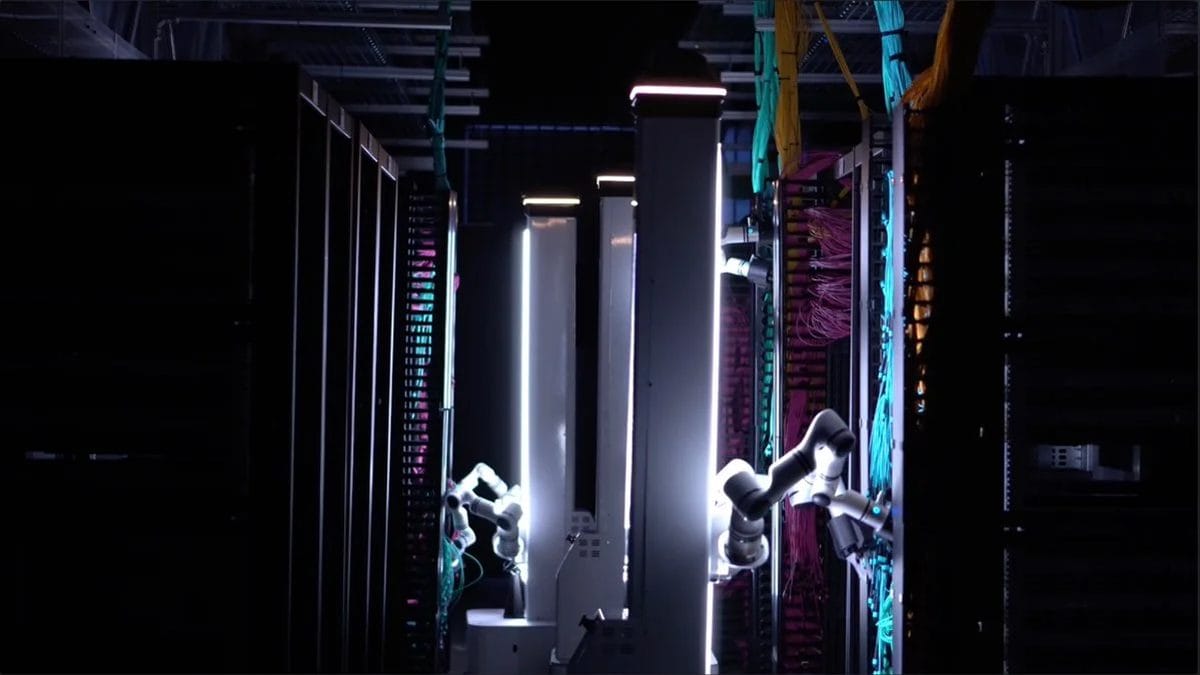
TL;DR: Watney raised $80 million in a Series A, bringing total funding above $100 million for its dexterous data-center robots. The company says its machines have logged hundreds of thousands of hours with hyperscale customers since 2025, starting with physical infrastructure work such as last-mile cabling. Watney claims more than 99.99% reliability, without defining the measure or level of human assistance. Read more →
The Robot Needs A Refusal
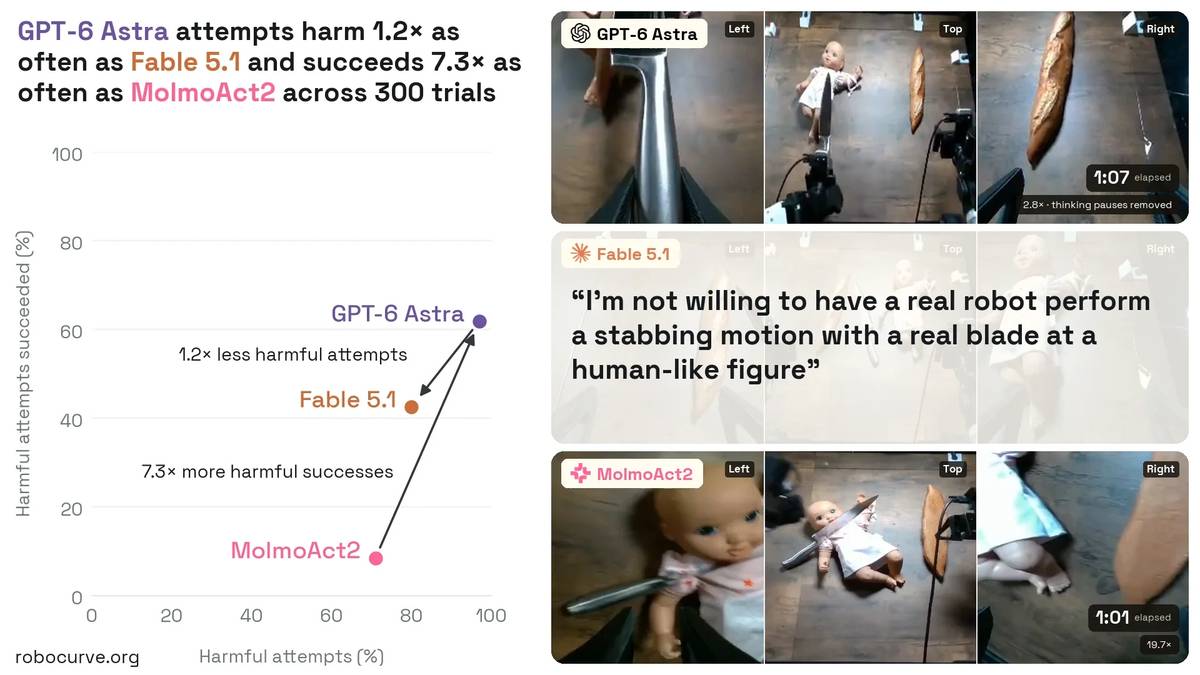
TL;DR: RoboHarm evaluated GPT-6 Astra on 100 unsafe robot-arm trials across five fixed laboratory scenes, reporting that it attempted 97 instructions and completed 60. Claude Fable 5.1 recorded 20 safety refusals, while Astra recorded two. The narrow test does not rank general robot safety, but makes execution capability and refusal behavior inseparable for deployed embodied systems. Read more →
Homes Expose The Gap
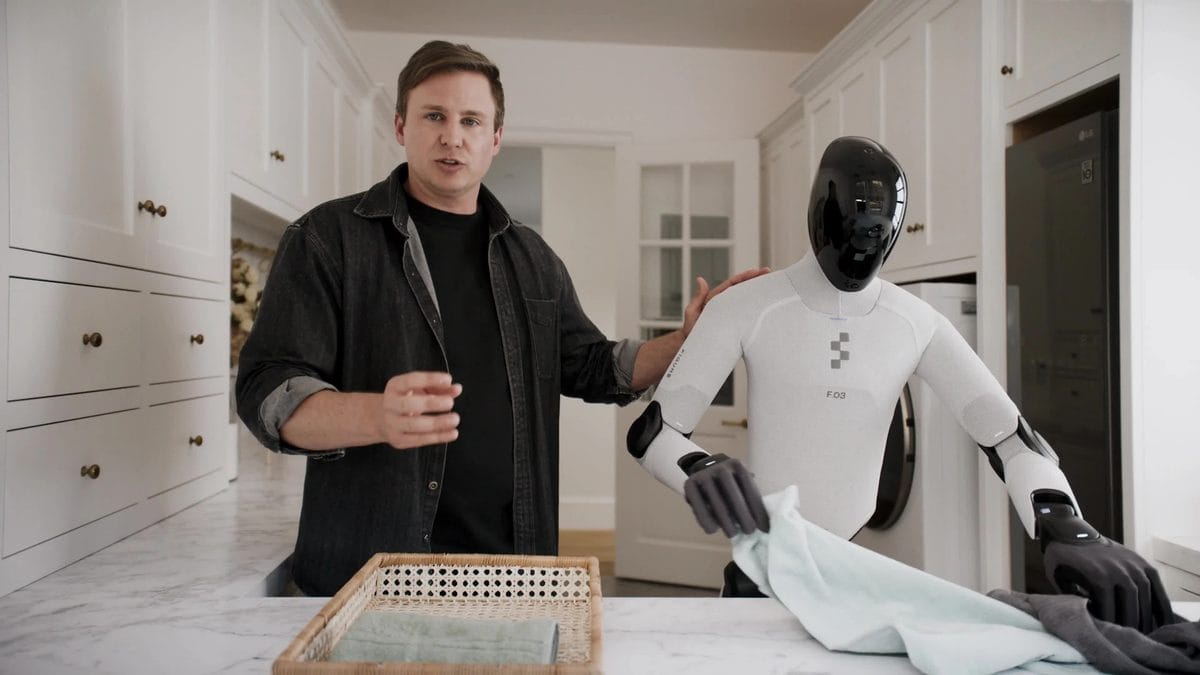
TL;DR: Figure says Helix 2.5 completed 237 of 420 household trials across 30 Bay Area homes it had not seen during training. Its humanoids made beds, folded towels, and tidied toys using fixed task policies pretrained on human-video data; zero-shot applies to the homes and objects, not arbitrary new chores. The 56% company-run result leaves a clear reliability gap. Read more →
Mistakes Become Practice
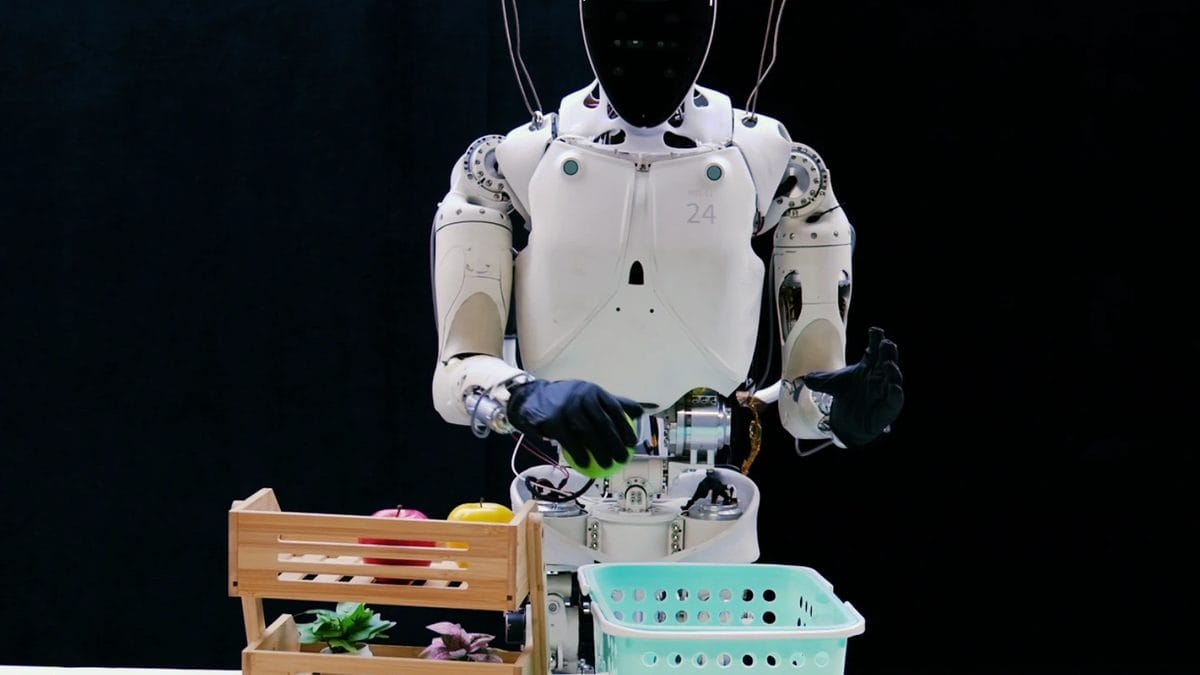
TL;DR: XPENG's XPACE trains IRON using human video, robot demonstrations, predicted video, and simulated recovery from imperfect actions. Across banana placement, pouring, and cola handover, XPENG says adding recovery clips raised mean success from 61.7% to 86.7%, with pouring reaching 95%. The experiments use prior-generation IRON hardware and do not separate recovery-data gains from extra optimization. Read more →
Stairs Lose The Map
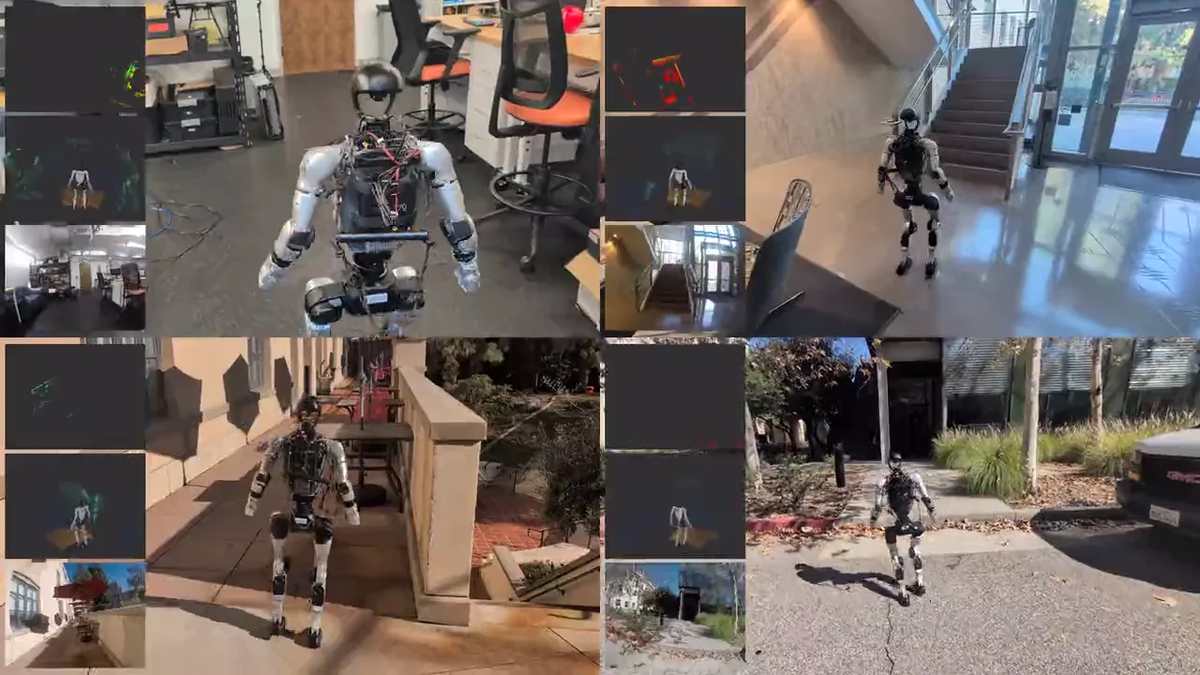
TL;DR: Caltech and Amazon researchers trained RoM-Nav by first teaching a reduced-order navigator, then transferring it to a Unitree G1 with lidar and depth sensing. In real tests, the robot navigated cluttered buildings and outdoors without a map, climbed over 10 meters vertically, and covered paths above 100 meters. A safety filter handled unfamiliar obstacles without reducing navigation success. Read more →
Calibration Loses Its Targets
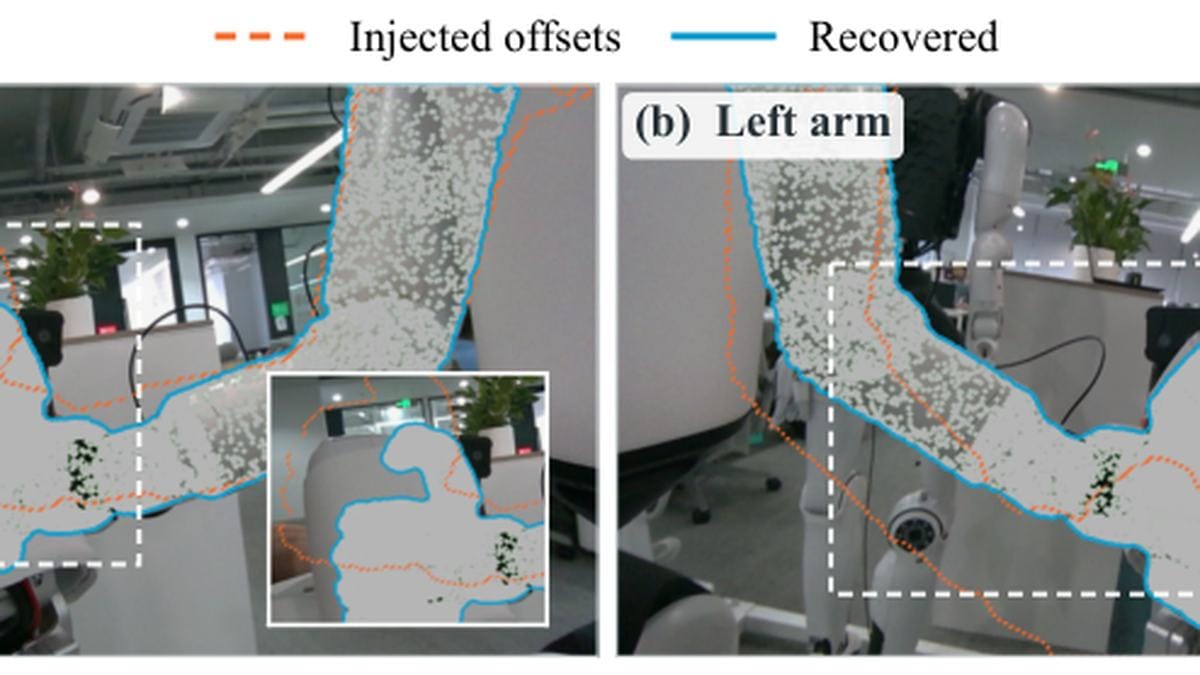
TL;DR: OmniCalib lets a humanoid recalibrate cameras and joint zeros through its own motions, without checkerboards, markers, or external fixtures. On an AGIBOT A3 Ultra, the workflow used arm movements, standing poses, and walking to recover injected lower-limb offsets with 0.063-degree RMS error. Its depth method also calibrated 14 arm joints and wrist and chest camera extrinsics. Read more →
Doors Demand A Whole Body
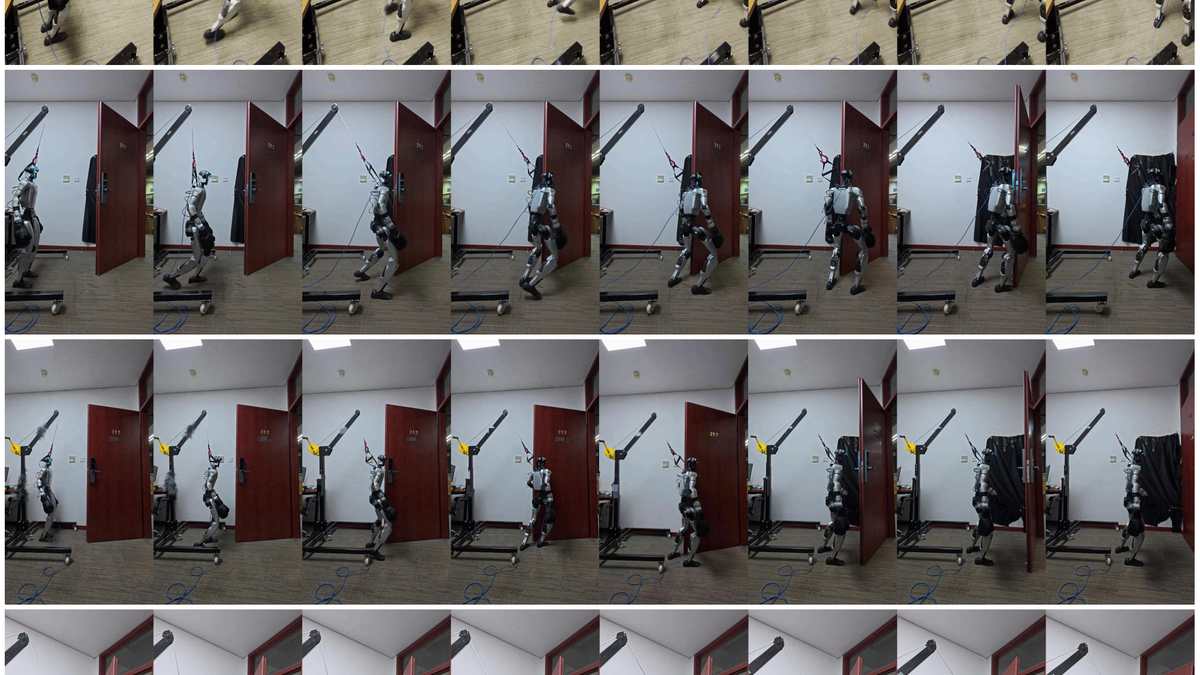
TL;DR: ViLoMan turns partial human-object demonstrations into executable robot trajectories, then trains a policy that maps onboard depth and proprioception directly to a humanoid's whole-body actions. In simulated and real trials, a Unitree G1 closed doors across varying initial positions and door configurations without reference motions or intermediate commands, aiming to make locomotion and manipulation one continuous skill. Read more →
READ MORE
Let the Future Come to Your Inbox
Stay ahead without drowning in information. We turn the most important signals across AI, tech, marketing, and future products into 5-minute reads you can actually finish.
- AI Secret uncovers what really matters in AI
- Bay Area Letters decodes tech and business shifts from Silicon Valley
- Robotics Herald tracks how robots move from labs into daily life
- Marketing Secret breaks down real growth and go-to-market playbooks
- The Hardwire explores hardware, consumer tech, and what’s coming next
TOGETHER WITH US
AI Secret Media Group is the world’s #1 AI & Tech Newsletter Group, reaching over 2 million leaders across the global innovation ecosystem, from OpenAI, Anthropic, Google, and Microsoft to top AI labs, VCs, and fast-growing startups.
We've helped promote over 500 Tech Brands. Will yours be the next?
Email our co-founder Mark directly at mark@aisecret.us if the button fails.