
🤖 The Robot Takes Traffic Duty

Good Morning, Roboticists!
Somewhere in Copenhagen, engineers built a table that moves things for you. IKEA's furniture is about to demand a salary.
The Robot Takes Traffic Duty
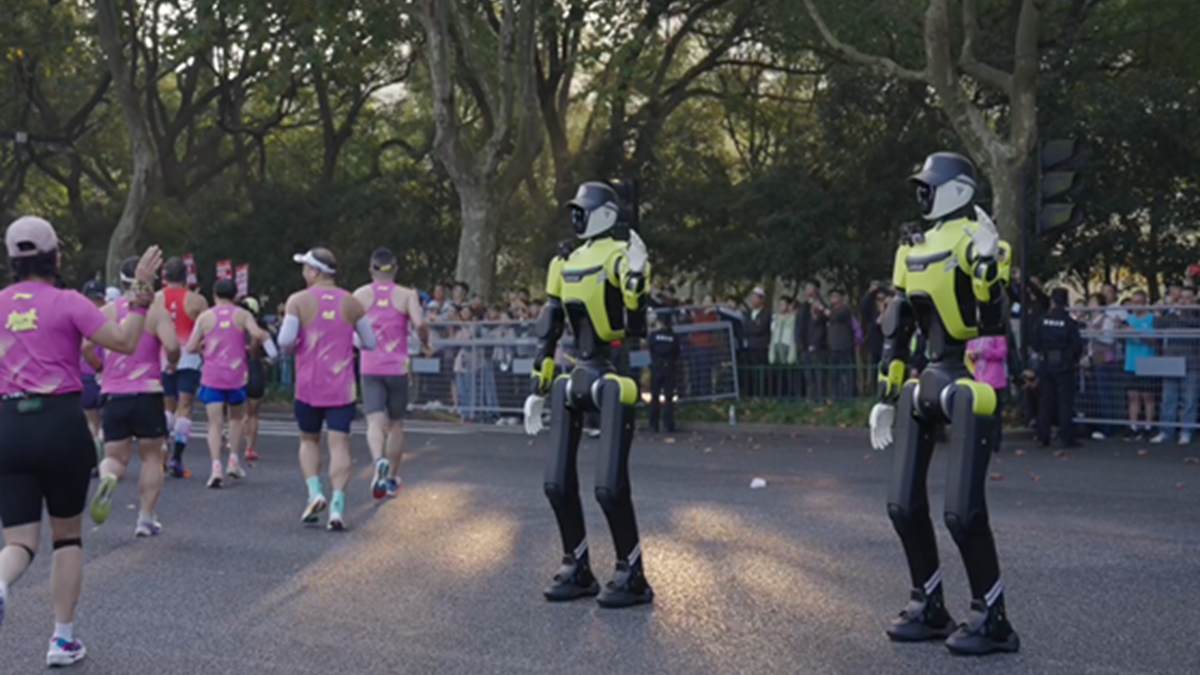
TL;DR: Hangzhou added DEEP Robotics humanoids to traffic operations at its marathon, assigning intersection monitoring, patrols, warnings and public inquiries around Huanglong Sports Center. The Hangxing No.2 system uses the company's weather-resistant DR02 platform. This is a concrete public-service deployment, but the report provides no independent uptime, intervention or detection-accuracy results from the crowded event itself. Read more →
Shipments Finally Cross Four Digits
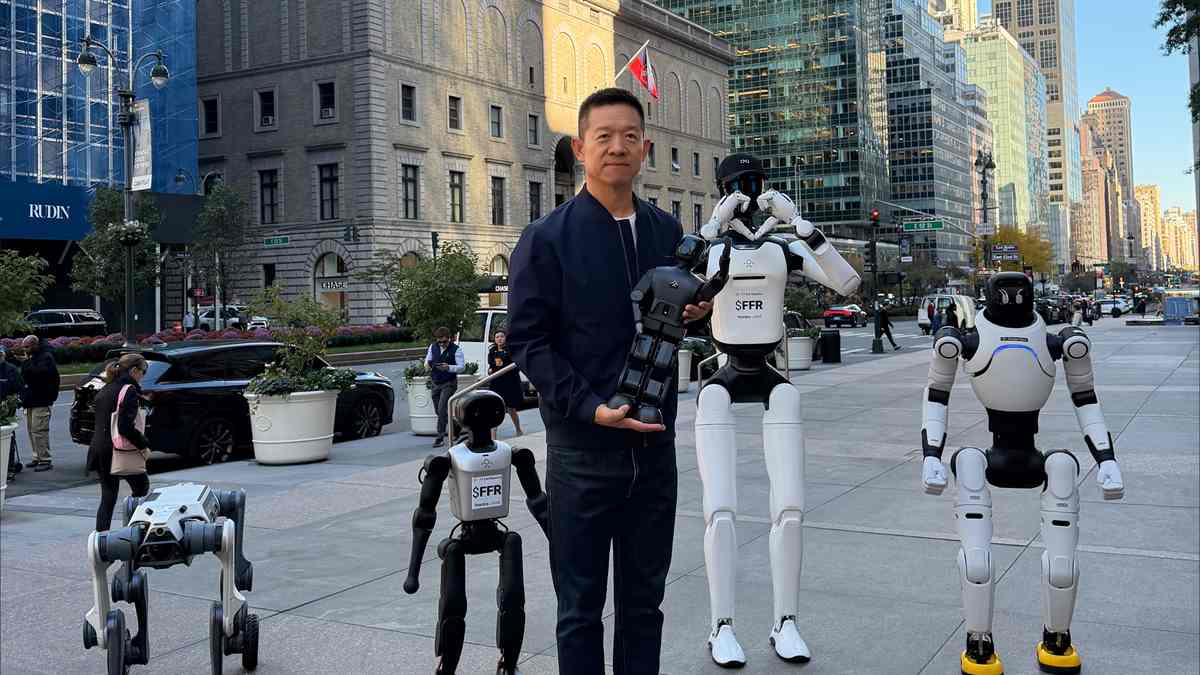
TL;DR: FF EAI Robotics Ecosystem says it sold and shipped 351 robot devices in October, bringing its cumulative count to 1,168 since deliveries began in late February. The update adds operating numbers to a business previously framed around its listing. These are company-reported device totals, without a humanoid-only breakdown, customer-level deployment evidence or disclosed monthly revenue. Read more →
First Make Room To Rise
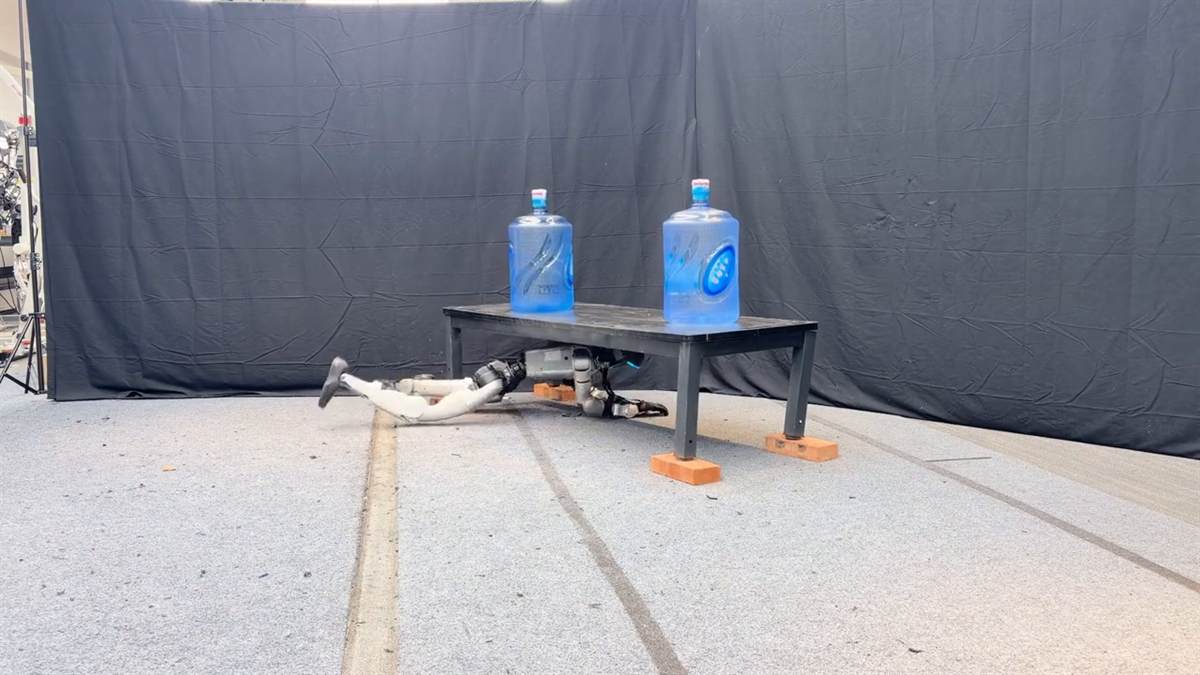
TL;DR: ROOF teaches a fallen humanoid to create space before trying to stand. A learned controller coordinates supported repositioning, obstacle clearance and rising, using only the robot's own body sensing during deployment. Tests on a Unitree G1 include furniture and unfamiliar obstacle arrangements. The useful advance is recovery under overhead constraints; the experiments still show substantial failures. Read more →
The Table Does The Moving
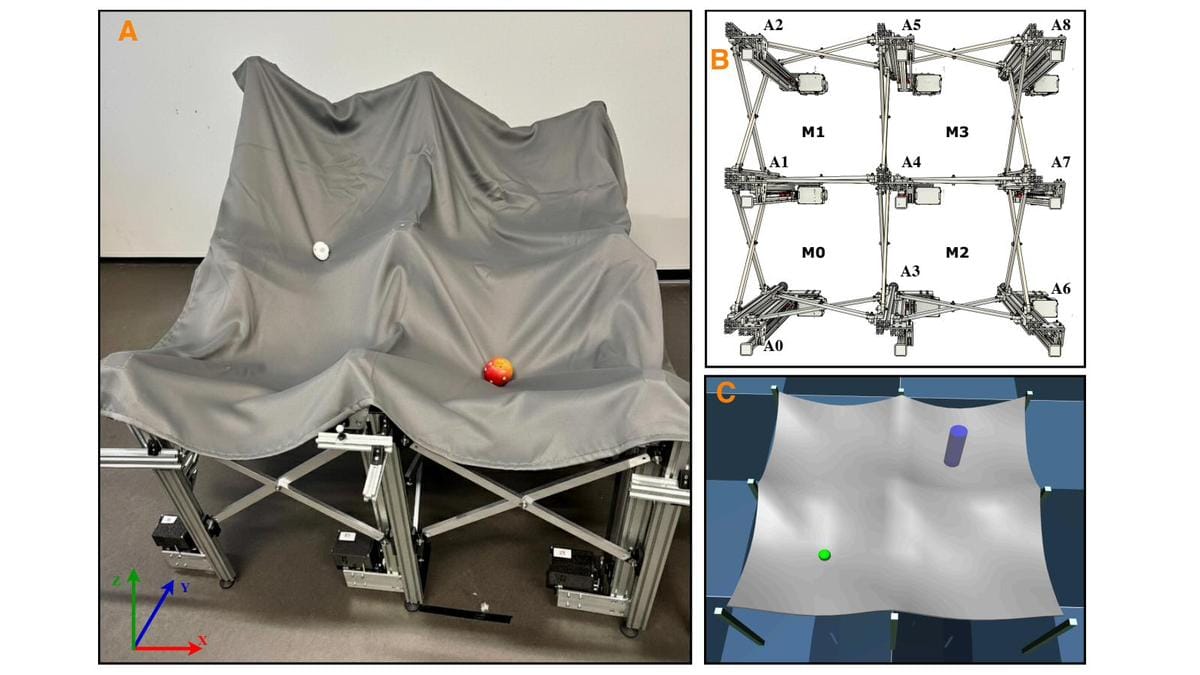
TL;DR: Researchers at IT University of Copenhagen built a manipulation surface that moves objects by changing the shape of suspended fabric. Nine actuators serve four connected modules across a square metre, transferring small objects between regions. Physical trials demonstrate positioning and shared-actuator compensation, while external motion capture, light payloads and limited repetitions constrain claims about industrial readiness. Read more →
A Simulated Coach Lightens Squats
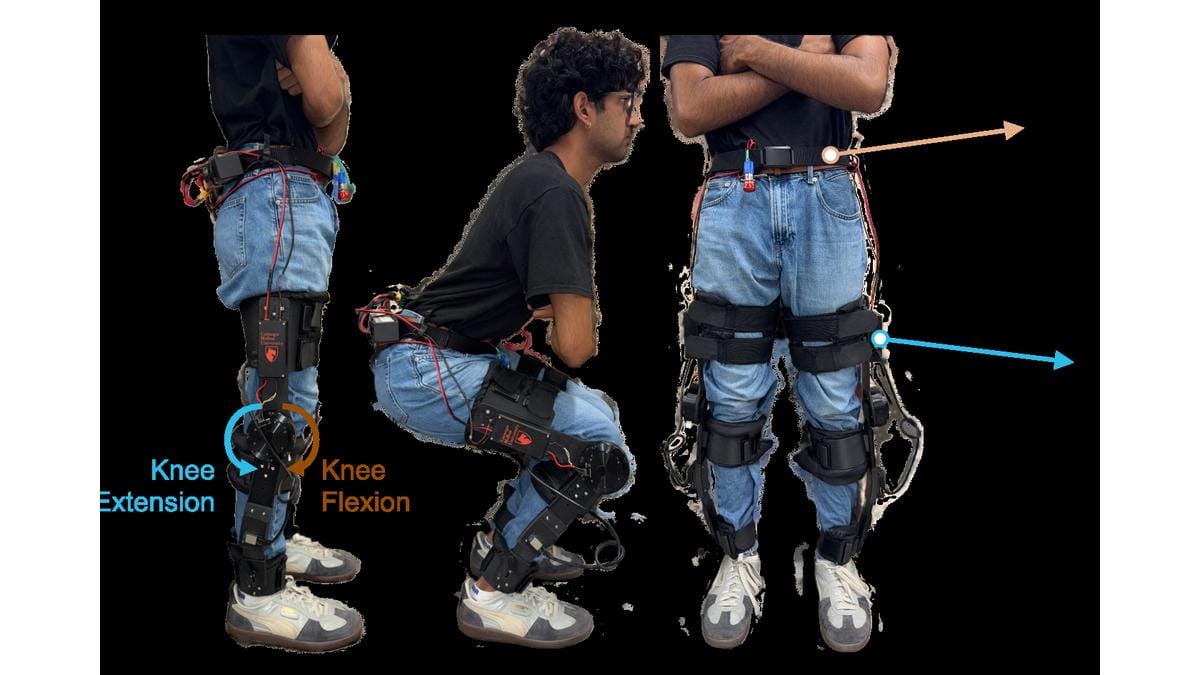
TL;DR: A new knee exoskeleton pairs accessible hardware with a controller trained entirely in musculoskeletal simulation, avoiding device-specific training recordings. In squatting experiments with seven healthy participants, assistance reduced peak biological knee-extension moment by 21.5% and peak vastus medialis activation by 26.7%. The result supports reproducible assistive-robot research, with walking, clinical populations and broader use still untested. Read more →
The Camera Takes Spoken Orders
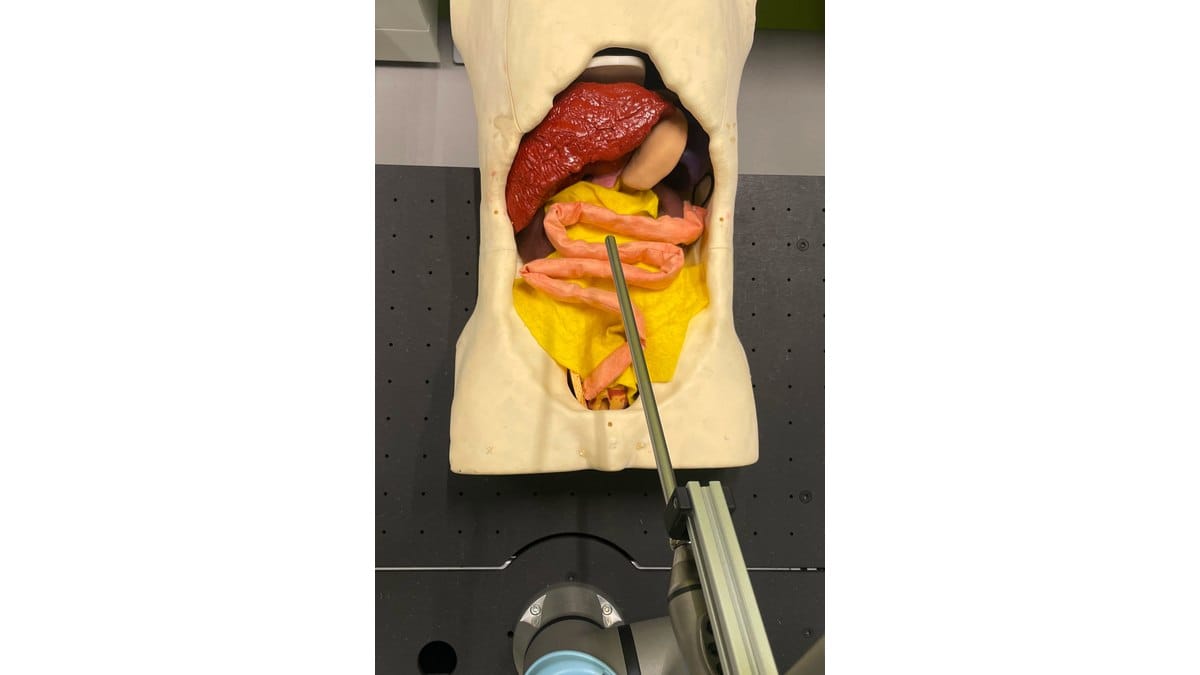
TL;DR: Dresden researchers trained a robot-held endoscope to respond to spoken instructions, including focusing, widening the view, tracking an instrument and stopping. Their policy learned from 235 demonstrations and completed 60 subtask evaluations on a surgical phantom. Performance varied sharply, with horizon leveling succeeding only half the time. This is camera-guidance research, with clinical validation still ahead. Read more →
The Base Learns Its Wobble
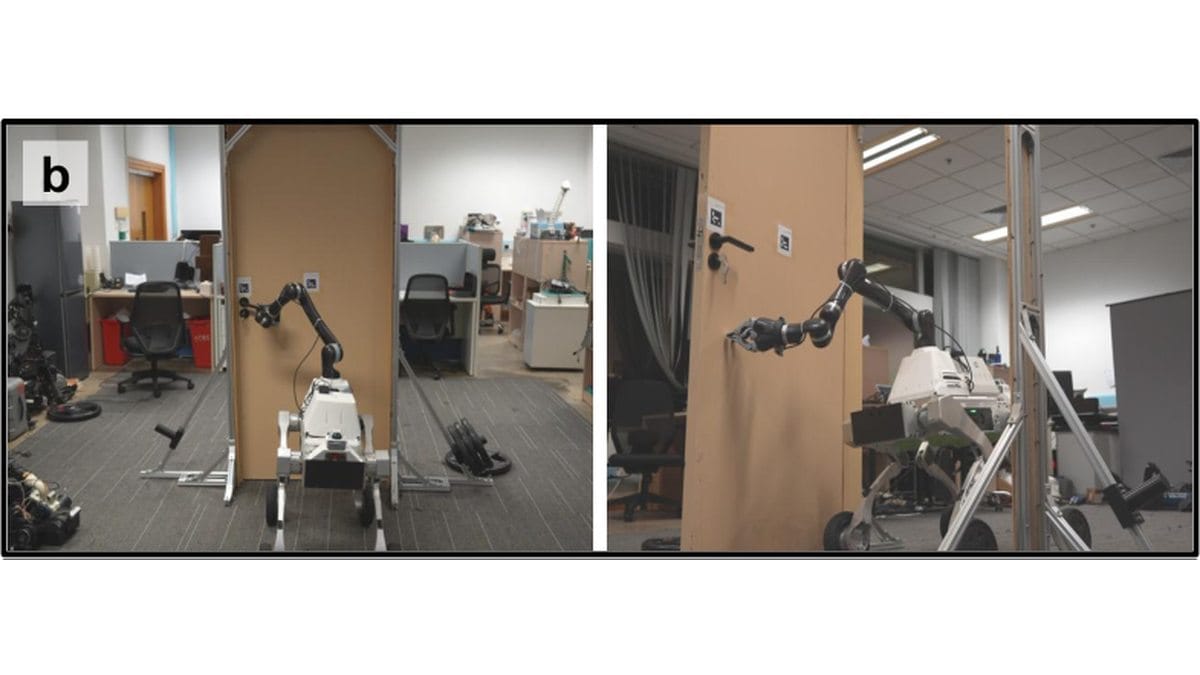
TL;DR: A Chinese University of Hong Kong team improves mobile manipulation without retraining the robot's walking policy. Its online learner estimates how the moving base actually responds, then adjusts coordinated arm and base commands. An M1 wheel-legged robot carrying a Kinova arm demonstrates moving grasps, disturbance recovery and door opening. Precision improves after adaptation, with noticeable transients remaining. Read more →
Human Videos Become Humanoid Motion
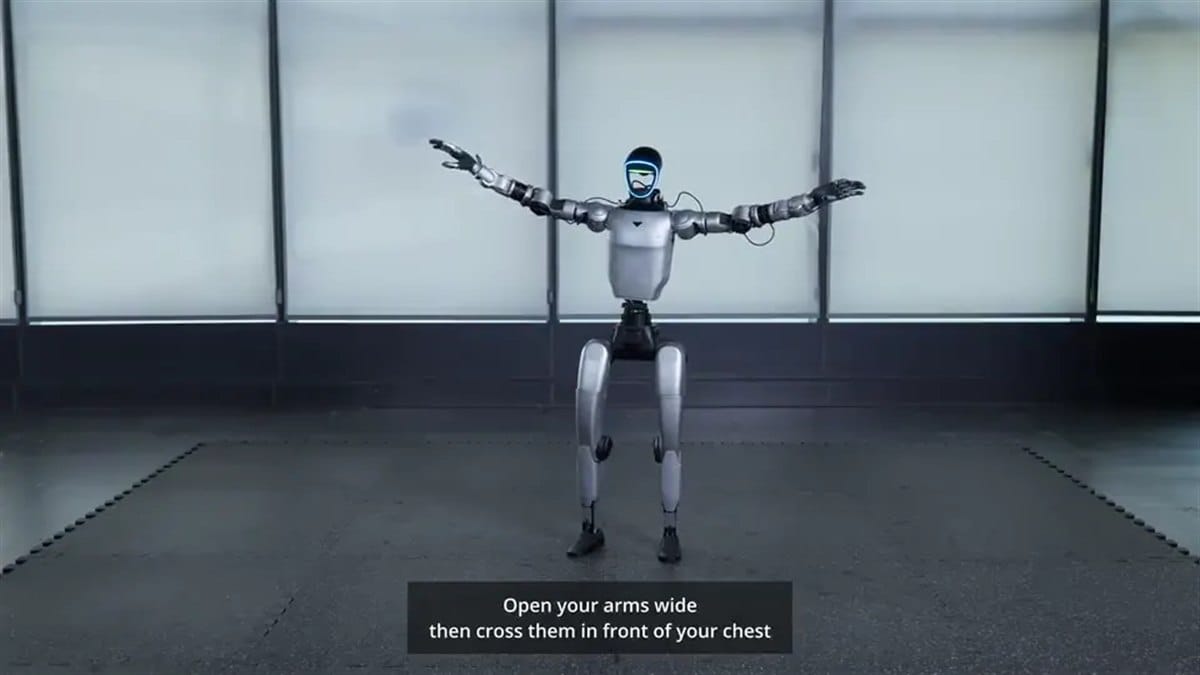
TL;DR: Movens-Zero turns text, speech, music and video into continuously updated humanoid motion. Its researchers describe a dataset containing five million executable humanoid-motion sequences derived from Internet footage, alongside fifteen million human-motion sequences. Unitree G1 demonstrations show several input modes on hardware. These examples establish behavioral range, while dataset verification and curated clips do not establish general task reliability. Read more →
Three Cameras Fit The Edge
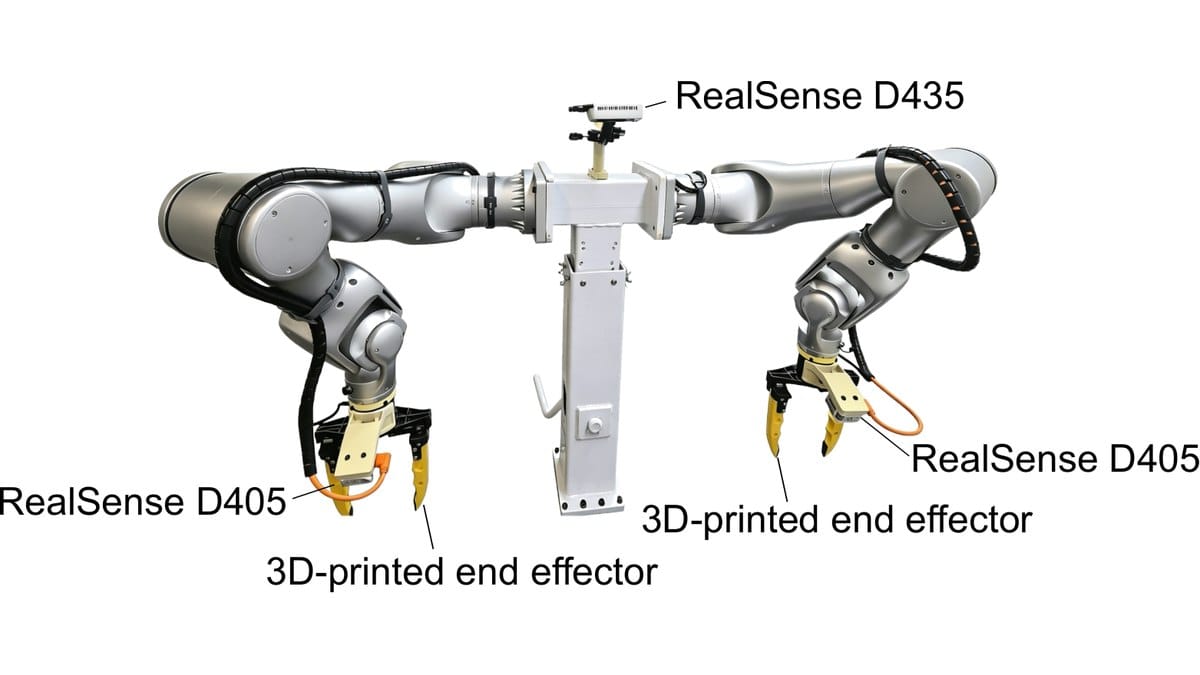
TL;DR: RTPolicy compresses three camera views into twelve visual tokens to make robot control cheaper to run. On two ROKAE arms, it averages 72% success across drawer, stacking and assembly tasks using an RTX 4090. Separate hardware benchmarks measure 32.9 inference updates per second on an RDK S600. The paper does not establish that success rate on that board. Read more →
Thinking Stops Blocking The Robot
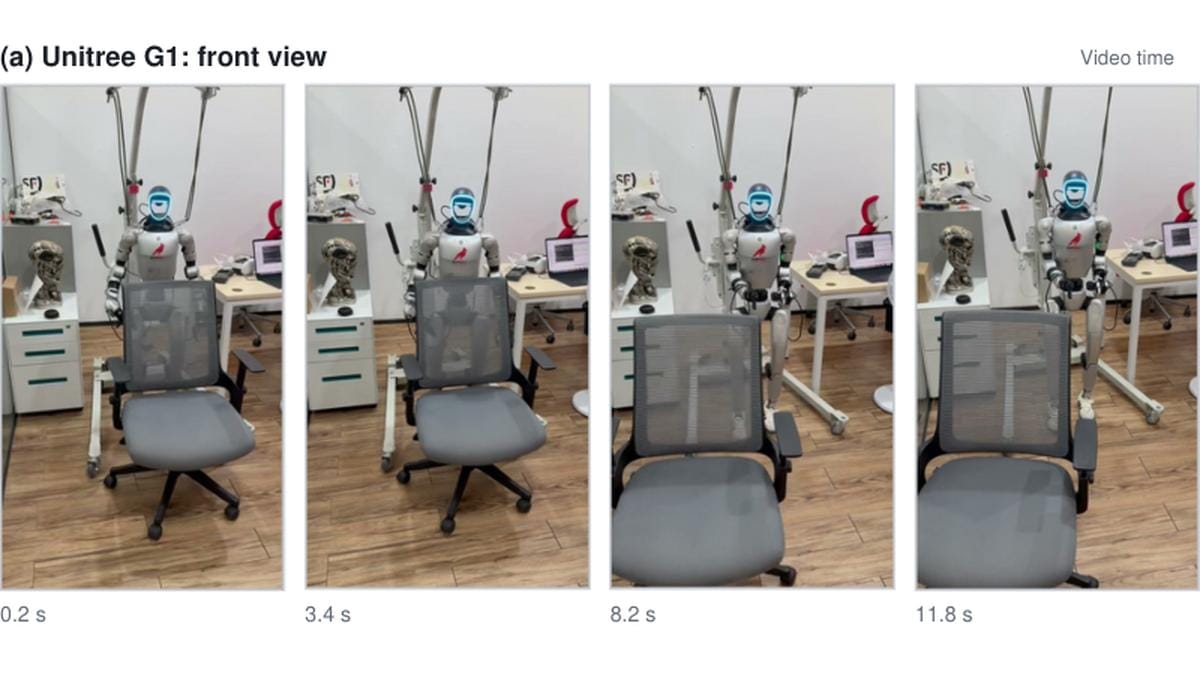
TL;DR: REA separates slow reasoning from fast robot skills so an executing controller does not wait for a foundation model. Its runtime selects policies, remembers measured capability and escalates recovery at action boundaries. Alongside simulation benchmarks, researchers test chair pushing on a secured Unitree G1 and block placement on AlohaMini2. Small, manually reviewed trials leave deployment reliability unresolved. Read more →
TOGETHER WITH US
AI Secret Media Group is the world’s #1 AI & Tech Newsletter Group, reaching over 2 million leaders across the global innovation ecosystem, from OpenAI, Anthropic, Google, and Microsoft to top AI labs, VCs, and fast-growing startups.
We've helped promote over 500 Tech Brands. Will yours be the next?
Email our co-founder Mark directly at mark@aisecret.us if the button fails.