🤖 Transformer T1

Good Morning, Roboticists!
What looks like novelty on the surface is increasingly a systems-level stress test.
TRANSFORMER
A Robot That Changes Itself to Keep Company
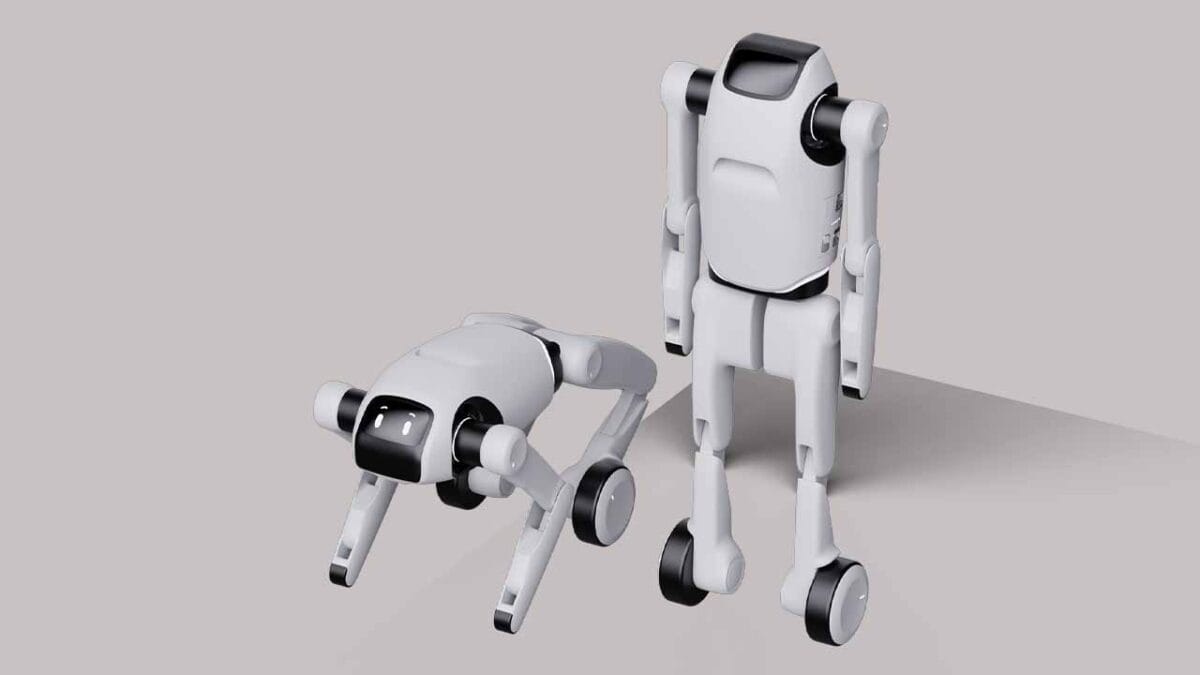
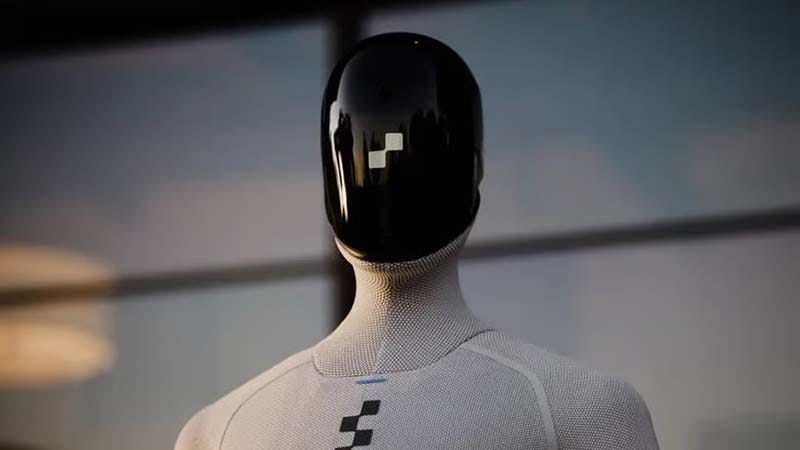
👀 What’s happening: Prime just introduced T1, a consumer robot built around dual form mobility. It shifts between a humanoid stance and a four legged mode, guided by multimodal perception, contextual awareness, and long term memory. The core goal is not task execution but staying with people across environments.
🌍 How this hits reality: T1’s technology stack prioritizes movement continuity over strength. Four-legged dog form handle 18 centimeter steps, 35 degree slopes, yards, and uneven ground. The humanoid form lowers psychological friction indoors. Use cases follow from that choice. It becomes a moving camera, a family AI interface, a learning companion, and a roaming presence rather than a fixed device.
🤖 Key takeaway: T1 understands when to be a dog and when to be a person. That choice is not symbolic. It reflects a shift where robots serve human psychology first. Coexistence becomes the product. Physical labor becomes secondary.
HOME TECH
A Floor Lamp Becomes a Household Robot
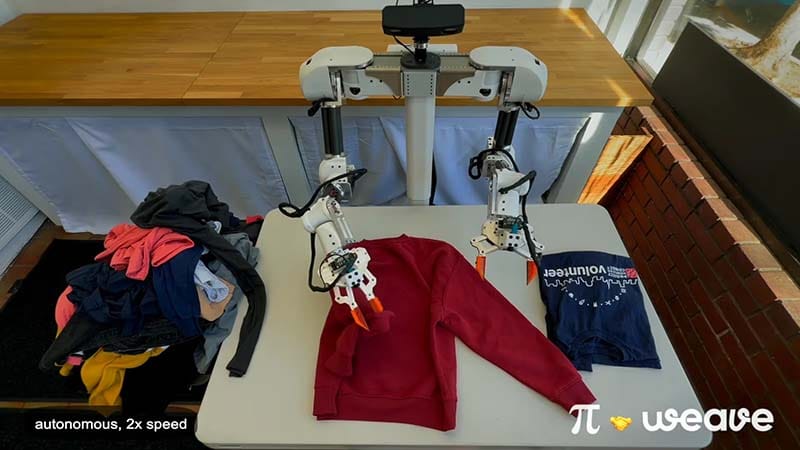
👀 What’s happening: Syncere, founded by University of Toronto alumni Aaron Tan and Angus Fung, unveiled Lume, a robotic floor lamp that folds laundry. It looks like furniture, stays idle until summoned by voice or app, then deploys arms and vision to fold clothes before disappearing back into a lamp. The design rejects humanoids entirely.
🌍 How this hits reality: Homes are unstructured and crowded, which breaks most robots. Lume fixes the problem by anchoring itself to one spot, beside the bed, for example, limiting its task to laundry, and building safety into hardware. It uses compliant motors, 360 degree sensing, and lockouts if people or pets approach.
🤖 Key takeaway: Once a lamp can transform into a task specific robot, the category expands fast. Floors, tables, and cabinets become latent machines. The risk is coordination and cost. The direction is homes slowly turning into reconfigurable robotic systems.
HANDS
A Ping-Pong Robot Shows How Fast Robots Now React
👀 What’s happening: Singapore based Sharpa showed North, a full humanoid robot that can play high speed ping pong autonomously. Its control loop reacts in about 0.02 seconds, fast enough to track ball trajectories and reposition its body and hands without scripts or human help.
🌍 How this hits reality: Ping pong matters because it is a contact rich task with tight timing margins. A 0.02 second reaction window is roughly an order faster than human reflexes. Combined with 22 degree of freedom hands and over 1,000 tactile points per finger, this pushes robots toward reliable manipulation across minutes long sequences, not single demos.
🤖 Key takeaway: This is less about sports and more about latency collapse. As perception to action loops approach real time, general purpose robots move from staged tricks to sustained work. The risk shifts from intelligence to cost, durability, and whether these systems can run all day without drifting.
QUICK HITS
- Hexagon Robotics and Microsoft partnered to combine Azure-based AI with industrial humanoid robots for faster deployment in manufacturing and logistics.
- A Chinese research team created self-healing artificial “pain nerves” that give robots more human-like reflexes and self-protection.
- Mobileye is acquiring Mentee Robotics for about $900 million to expand from autonomous driving into physical AI and humanoid robotics.
- Lyte emerged from stealth with $107 million to build a unified perception platform as foundational infrastructure for Physical AI.
- UCL Bartlett students built Arkhive, a reconfigurable timber pavilion using robotic fabrication.
READ MORE
Let the Future Come to Your Inbox
Stay ahead without drowning in information. We turn the most important signals across AI, tech, marketing, and future products into 5-minute reads you can actually finish.
- AI Secret uncovers what really matters in AI
- Bay Area Letters decodes tech and business shifts from Silicon Valley
- Robotics Herald tracks how robots move from labs into daily life
- Marketing Secret breaks down real growth and go-to-market playbooks
- The Hardwire explores hardware, consumer tech, and what’s coming next
- Oncely helps you discover the next wave of AI products and launches
TOGETHER WITH US
AI Secret Media Group is the world’s #1 AI & Tech Newsletter Group, reaching over 2 million leaders across the global innovation ecosystem, from OpenAI, Anthropic, Google, and Microsoft to top AI labs, VCs, and fast-growing startups.
We've helped promote over 500 Tech Brands. Will yours be the next?
Email our co-founder Mark directly at mark@aisecret.us if the button fails.