🤖 Built for Real Danger
Good Morning, Roboticists!
Robotics is no longer about spectacle or demos. It is about replacing humans precisely in situations where the cost of human presence has become too high, whether physically, operationally, or structurally.
HUMANOIDS
Kawasaki Bets on Humanoids Built for Real Work
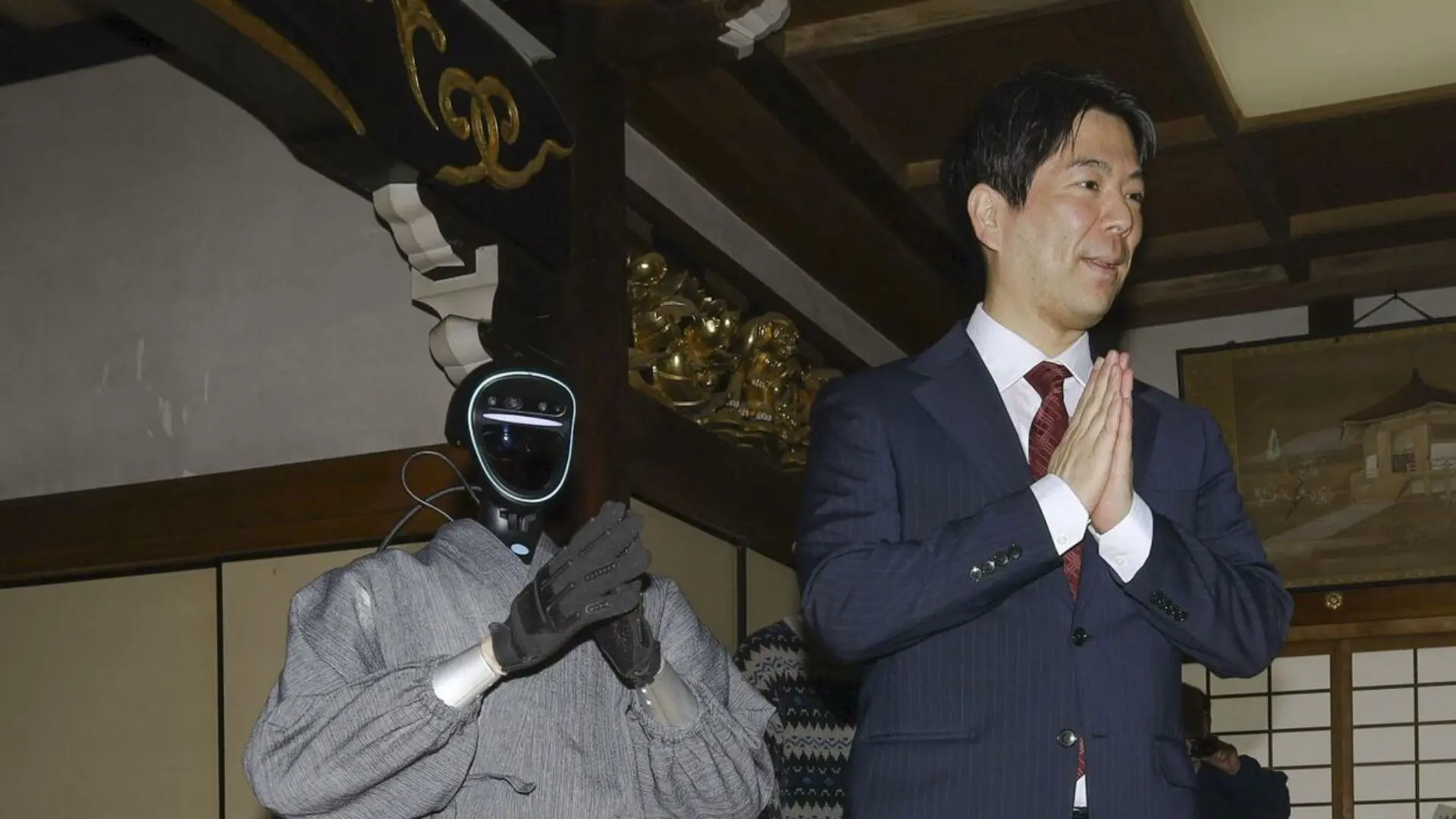
Kawasaki Heavy Industries has unveiled the ninth generation of its Kaleido humanoid robot at the International Robot Exhibition in Tokyo. The demo was simple on purpose. Kaleido climbed stairs, crossed uneven ground, lifted a 30 kilogram shelf, sprayed down a fire, and pulled a dummy cat from a mock disaster scene. It also did a few basic household tasks. Nothing flashy. No acrobatics. What changed is that Kawasaki is no longer presenting Kaleido as a lab project. It is positioning it as a machine meant to share human spaces and use human tools in places people should not be.
This matters because it stresses a different assumption in humanoid robotics. Many teams chase speed, balance, and viral movement. Kawasaki is optimizing for load, durability, and operator trust. A 30 kilogram lift already overlaps with real logistics and rescue thresholds. The platform supports both autonomous operation and remote control, which aligns with how industrial robots are actually deployed today. This looks less like a consumer robot roadmap and more like an extension of heavy machinery into human form.
If this direction holds, humanoids will enter the market sideways. Not as companions or spectacles, but as regulated equipment for disaster response, infrastructure maintenance, and care environments. That path is slower, but it is harder to displace once embedded.
NEW TECH
A Caterpillar Shaped Robot Quietly Challenges Humanoid Obsession
Porcospino Flex is a crawling robot built by researchers at the University of Genoa, and it looks intentionally unsettling. The body is long, segmented, and lined with stiff spines, inspired by porcupines and millipedes rather than people. It moves like a living track, tightening internal cables to bend and steer while the outer shell grips the ground. Control is simple. A Raspberry Pi runs the system and drives small geared motors. The design choice is deliberate. This robot is meant to move through mud, debris, and tight spaces without pretending to be human.
The application space is narrow but real. Pipe inspection, sewer maintenance, collapsed buildings, and mines all punish legs, wheels, and balance heavy platforms. This design trades dexterity for traction and resilience. It does not need clean floors or mapped environments. It needs friction and confinement. That shifts the cost curve. Fewer sensors, cheaper compute, and less calibration mean it can be deployed where failure is expected, not catastrophic.
If this pattern continues, expect more non anthropomorphic machines built around terrain, not optics. The risk for humanoid heavy roadmaps is misallocation. Capital follows spectacle. Deployment follows physics. Robotics infrastructure will likely split between showpieces and tools. Porcospino Flex sits firmly in the second camp.
HEALTHCARE
Musk Reasserts AI and Robotics as an Antidote to Healthcare Failure
Government healthcare is like having the DMV as your doctor.
— Elon Musk (@elonmusk) December 26, 2025
Grok and Optimus will provide incredible healthcare for all.
Elon Musk weighed in after a man in Edmonton died waiting more than eight hours in an emergency room. The patient arrived with severe chest pain, was told tests showed nothing urgent, and was left in triage while his condition worsened. His wife says staff brushed off her concerns and labeled her rude. The case spread quickly online. Musk responded by comparing government run healthcare to the DMV and used the moment to point toward his own AI and Optimus technology stack as a better future.
The remark hit because it collided with real constraints. Canada spends heavily on healthcare, yet ER backlogs persist and triage systems are built around averages, not outliers. When staffing is thin and volume spikes, human judgment degrades. Musk is exploiting a gap people feel but rarely articulate. That care quality does not scale cleanly with headcount or funding. By framing the failure as structural, he shifts the debate from management reform toward system redesign.
Musk’s vision is that AI and robotics can replace large parts of clinical decision making. He name checked Grok from xAI and Optimus from Tesla as future healthcare providers. That is aspirational and premature. Diagnosis, liability, and trust are not software problems alone. Still, the direction matters. Healthcare is being recast as an automation challenge. Once that frame sticks, policy and capital tend to follow.
QUICK HITS
- Nigeria approved the Toumai robotic surgical system, becoming the first West African country to clear a robotic surgery platform for clinical use.
- China’s 2026 tariff update adds new robot categories with differentiated rates to support the industry.
- A Tokyo robot venture uses human-operated avatars to enable housebound people to work as café staff and tour guides, expanding social participation through telepresence.
- Westchester County, New York, has installed EverestLabs’ robotic at its MRF to boost recycling efficiency and reduce contamination.
- OneRobotics raised about $206 million in a Hong Kong IPO, signaling a strategic shift from smart-home devices toward AI-powered home robots.
TOGETHER WITH US
AI Secret Media Group is the world’s #1 AI & Tech Newsletter Group, reaching over 2 million leaders across the global innovation ecosystem, from OpenAI, Anthropic, Google, and Microsoft to top AI labs, VCs, and fast-growing startups.
We operate the industry’s most influential portfolio of newsletters, each shaping a different frontier of the AI & Tech revolution:
Be Smarter in 5 Minutes
- AI: AI Secret
- Tech & Business: Bay Area Letters
- Marketing: Marketing Secret
Discover the Future Products
- AI Launchpad: Oncely
- Robotics: Robotics Herald
- Hardwares: The Hardwire
We've helped promote over 500 Tech Brands. Will yours be the next?
Email our co-founder Mark directly at mark@aisecret.us if the button fails.